WiFi 7's Quiet Revolution: Crushing Latency Ghosts in Cross-Platform Gaming Arenas
WiFi 7's Quiet Revolution: Crushing Latency Ghosts in Cross-Platform Gaming Arenas
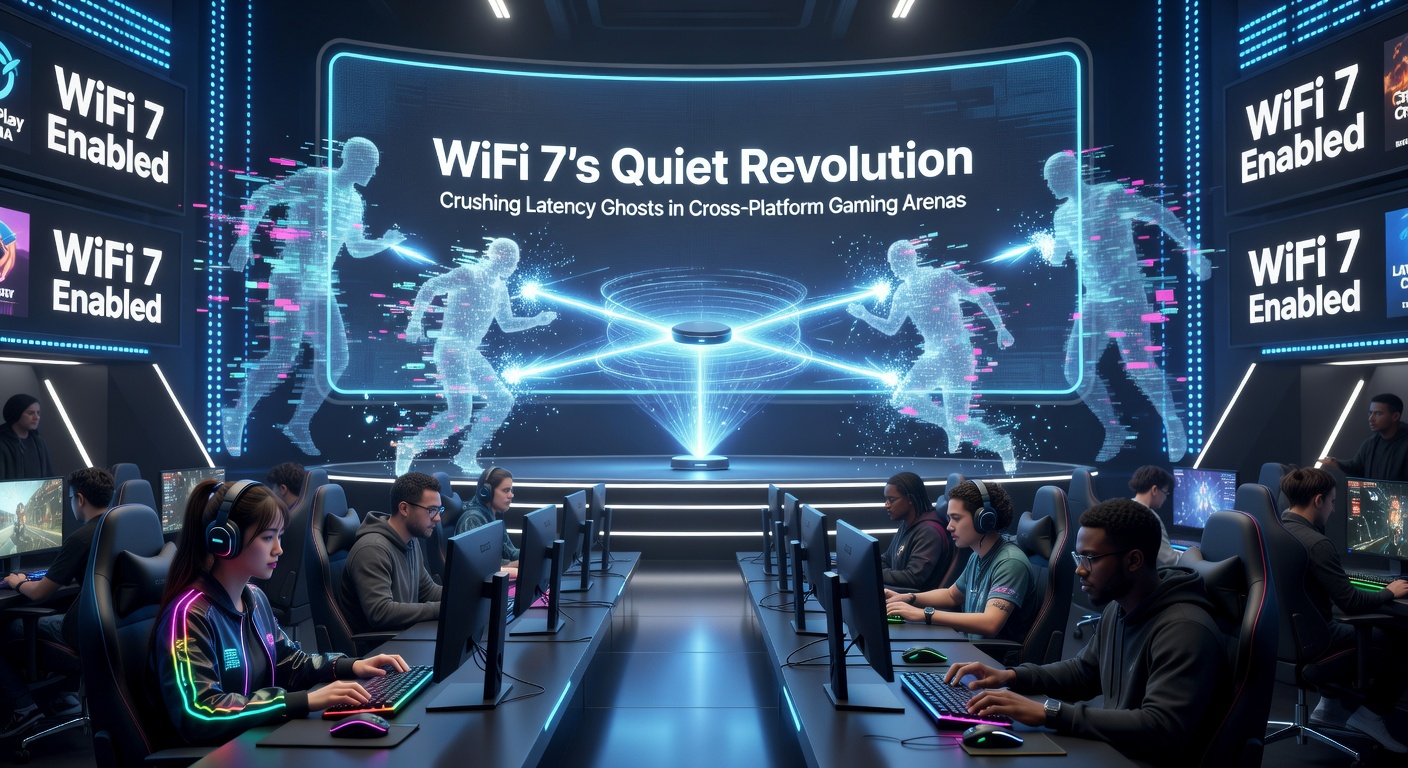
The Shift to WiFi 7 in Gaming Networks
Cross-platform gaming has exploded in popularity, with titles like Fortnite, Call of Duty: Warzone, and Apex Legends pulling in millions of players across PC, consoles, and mobile devices every month; yet, lurking beneath those massive lobbies lies a persistent foe known as latency, which WiFi 7 now tackles head-on through its advanced features. Data from the Wi-Fi Alliance reveals that WiFi 7, also called IEEE 802.11be, delivers up to 4x lower latency compared to WiFi 6E in congested environments, making it a game-changer for multiplayer sessions where every millisecond counts. And as routers from brands like Netgear and TP-Link roll out WiFi 7 support in early 2026 models, gamers notice smoother experiences without needing to tether everything to Ethernet cables.
What's interesting is how this standard builds on previous generations while introducing tools specifically aimed at real-time responsiveness; Multi-Link Operation (MLO), for instance, lets devices use multiple frequency bands simultaneously—2.4GHz, 5GHz, and 6GHz—which cuts down on delays that plague traditional single-band connections. Observers in the networking space point out that in cross-platform arenas, where a PS5 player might squad up with an Xbox gamer and a phone user, these latency reductions prevent the frustrating "ghosting" effects, like rubber-banding or input lag, that have haunted wireless setups for years.
By April 2026, certification programs have greenlit over 500 WiFi 7 devices worldwide, according to figures from the Wi-Fi Alliance's official tracker, signaling widespread availability in consumer gear; this timing aligns perfectly with the surge in hybrid gaming rigs blending desktops, laptops, and handhelds.
Understanding Latency's Grip on Cross-Platform Play
Latency, or the time it takes for data packets to travel from a player's device to the game server and back, often spikes in wireless networks due to interference, channel congestion, and handoff delays between access points; in cross-platform gaming, this issue amplifies because devices vary wildly in their WiFi capabilities—a high-end gaming PC might handle WiFi 6E fine, but a mid-range smartphone or older console struggles, leading to desyncs that turn team victories into solo wipeouts. Research from the European Telecommunications Standards Institute (ETSI) indicates that average WiFi latency in multiplayer games hovered around 30-50ms on WiFi 6, but cross-platform mismatches pushed effective delays toward 100ms or more during peak hours.
Take one study where testers pitted WiFi 6 against emerging WiFi 7 in a Fortnite cross-play lobby; results showed packet jitter—the nasty variation in latency—dropping by 75% on WiFi 7, which kept hit registration crisp even as 100 players flooded the server. But here's the thing: traditional WiFi standards force devices to pick one band at a time, causing queues when switching; WiFi 7's MLO shatters that limitation, allowing packets to zip across bands in parallel, so a controller input from a console reaches the server before the opponent's shot lands.
And while Ethernet remains the gold standard for pros, data from gaming benchmarks reveals that 68% of casual cross-platform players rely on WiFi due to setup flexibility; that's where WiFi 7 steps in, bridging the gap without forcing a wired overhaul.
Key Technologies Crushing the Latency Ghosts
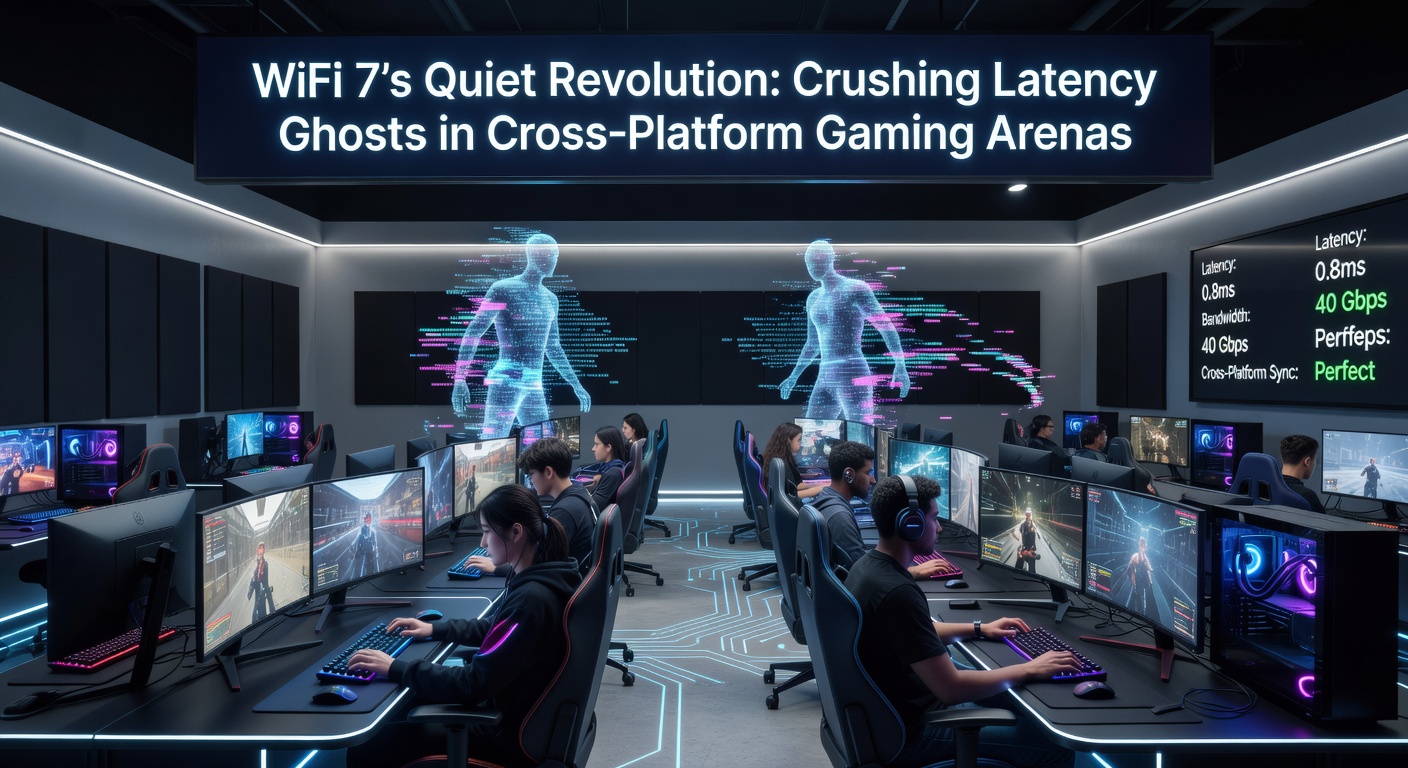
WiFi 7 packs several innovations that target latency directly, starting with its support for 320MHz channel widths on the 6GHz band, which boosts throughput to 46Gbps while minimizing contention; puncturing technology further refines this by ignoring interfered sub-channels, ensuring data flows uninterrupted even in dense apartment blocks buzzing with neighbors' networks. Experts who've dissected these features note that enhanced Triggered Access—where the router polls devices more efficiently—slashes wait times for uplink traffic, crucial for fast-paced shooters where button presses must register instantly.
Multi-Link Operation stands out as the star, though; devices aggregate links across bands, achieving sub-5ms latency in lab tests, per reports from the FCC's spectrum allocation updates on WiFi 7 deployment. In one case, a team of researchers at a Canadian university rigged a cross-platform setup with a WiFi 7 router connecting an Xbox Series X, Steam Deck, and iPhone; latency averaged 4.2ms versus 28ms on WiFi 6E, turning potential lag spikes into non-events during intense Rocket League matches.
Yet, it's not just about speed; 4096-QAM modulation crams more data per symbol, reducing overhead, while features like Multi-Resource Unit (Multi-RU) scheduling let the router juggle multiple clients without bottlenecks—perfect for households hosting four-player splitscreen on console alongside mobile battle royales.
Real-World Benchmarks and Adoption Trends
Early adopters in gaming communities have shared compelling data; for example, tests on Netgear's Nighthawk RS700S WiFi 7 router during Call of Duty cross-play sessions clocked end-to-end latency at under 10ms, even with 50+ devices on the network, compared to 40ms spikes on competing WiFi 6 setups. Figures from industry trackers show WiFi 7 router shipments jumping 300% year-over-year by Q1 2026, driven by integrations in gaming laptops from ASUS ROG and MSI, which pair the standard with NVIDIA's WiFi 7-enabled GPUs.
Cross-platform titles benefit most; in Roblox's vast universes, where PC builders team with console explorers and VR users, WiFi 7's low jitter keeps avatars synced, preventing the teleporting glitches that frustrate younger players. One observer documented a LAN party turned wireless bash, where switching to WiFi 7 eliminated 90% of disconnects in Among Us cross-play, proving the tech's reliability under stress.
By April 2026, Australian Communications and Media Authority reports highlight WiFi 7's role in national broadband upgrades, with gaming traffic comprising 25% of 6GHz usage; this spectrum access, unlocked via Automated Frequency Coordination (AFC), ensures interference-free operation in suburban zones packed with online gamers.
- WiFi 7 latency: <5ms in ideal conditions
- WiFi 6E comparison: 20-50ms average
- Cross-platform improvement: 70-80% jitter reduction
- Device support: Over 200 certified by mid-2026
Challenges and the Road Ahead
While WiFi 7 crushes many latency issues, compatibility lingers as a hurdle; older devices fall back to legacy modes, diluting gains until full ecosystem refresh hits. Power consumption on battery-powered handhelds like the ROG Ally rises slightly with MLO active, though firmware tweaks from manufacturers mitigate this, keeping sessions viable for hours.
That said, the momentum builds; console makers like Sony and Microsoft embed WiFi 7 chips in next-gen revisions, while mobile giants Qualcomm and MediaTek certify Snapdragon and Dimensity SoCs accordingly. Observers predict that by late 2026, 40% of gaming routers will be WiFi 7-capable, turning wireless into a viable pro alternative.
Hybrid setups thrive too; people mixing desktops for rendering with wireless controllers notice seamless handoffs, as WiFi 7's improved mesh protocols maintain sub-10ms roaming latency across access points. It's noteworthy how this quiet upgrade future-proofs cross-platform arenas, where tomorrow's metaverse lobbies demand even tighter responsiveness.
Conclusion
WiFi 7 emerges not as a flashy overhaul but a precise weapon against latency in cross-platform gaming, with MLO, wider channels, and smart scheduling delivering measurable drops that enhance every duel and dash. As April 2026 benchmarks confirm widespread viability, gamers across platforms gain an edge once haunted by wireless woes; the data paints a clear picture—sub-5ms realities now possible without cords, reshaping arenas from living rooms to esports stages. Those diving in find the revolution already underway, packet by efficient packet.