The evolution of middleware pipelines enabling seamless asset sharing between indie developers working on mixed hardware ecosystems
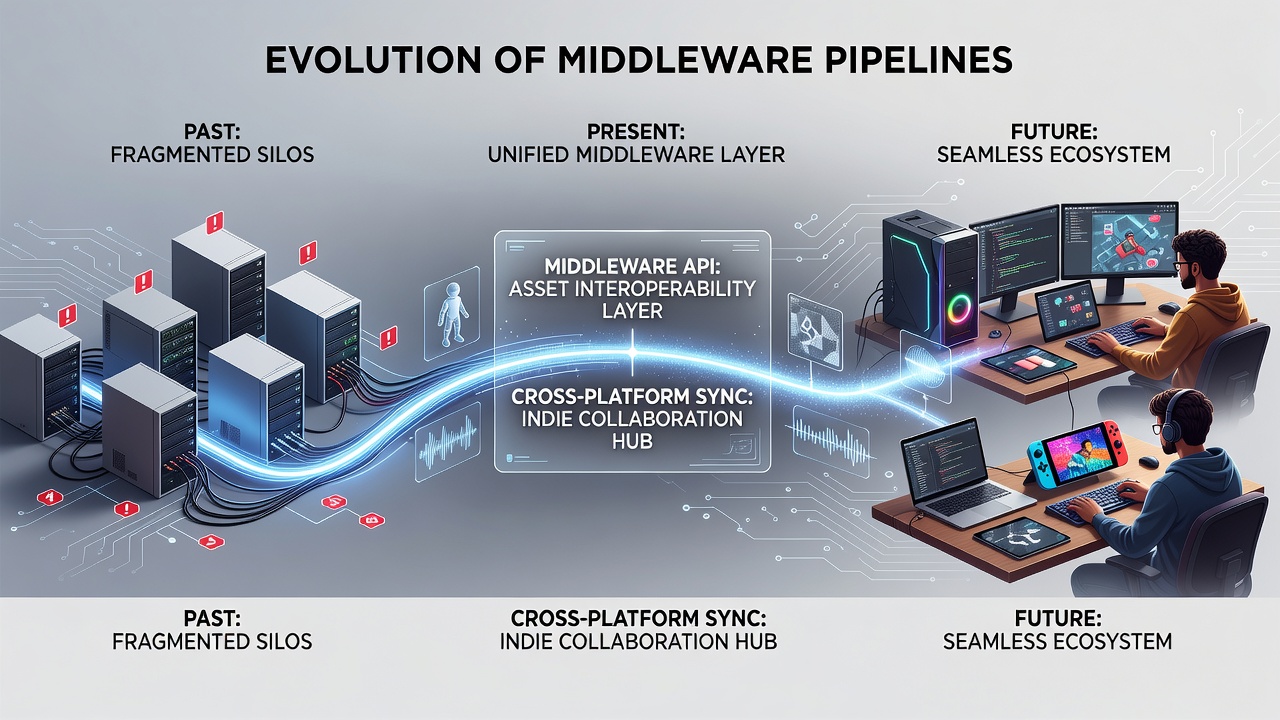
Indie developers have navigated fragmented hardware landscapes for years, where asset creation for one platform rarely translated cleanly to another, yet middleware pipelines have steadily adapted to close those gaps through standardized formats and automated conversion layers. Early systems relied on manual file exports and platform-specific tweaks that consumed development cycles, while modern tools integrate asset validation, compression, and synchronization directly into shared workflows. Researchers at institutions across multiple regions have tracked these shifts, noting that by June 2026 the focus has moved toward real-time collaboration layers that support simultaneous editing across PC rigs, handheld devices, and console environments without format conflicts.
Foundations of Asset Pipeline Development
Initial middleware efforts in the 2010s centered on basic asset managers that handled texture resizing and model scaling for individual engines, although these solutions left gaps when teams mixed hardware such as desktop workstations with emerging mobile targets. Data from industry reports indicate that asset reworking accounted for significant portions of project timelines in smaller studios, prompting the creation of intermediary layers that could parse common file types like FBX and OBJ into engine-native structures. Observers note that the introduction of extensible scripting within these pipelines allowed developers to define custom rules for hardware-specific optimizations, reducing duplication while preserving visual fidelity across ecosystems.
Those pipelines gained traction as open standards matured, with formats such as glTF providing a neutral exchange point that middleware could leverage for automated processing. Teams working on mixed setups discovered that embedding metadata tags for target hardware enabled downstream tools to apply appropriate LOD adjustments and shader variants without manual intervention. Academic studies from European research centers have documented how these early integrations laid groundwork for broader sharing mechanisms, particularly when indie groups pooled resources across geographic and device boundaries.
Advances in Cross-Hardware Synchronization
Subsequent refinements introduced version-controlled repositories that tracked asset changes in real time, allowing multiple contributors on disparate devices to merge updates through conflict-resolution algorithms built into the middleware. This approach proved especially useful for projects spanning stationary PCs and portable hardware, where network variability demanded robust delta-compression techniques. Figures from trade associations reveal steady adoption rates among indie collectives, driven by the need to maintain consistency in shared libraries that fed into both high-end graphics pipelines and resource-constrained environments.
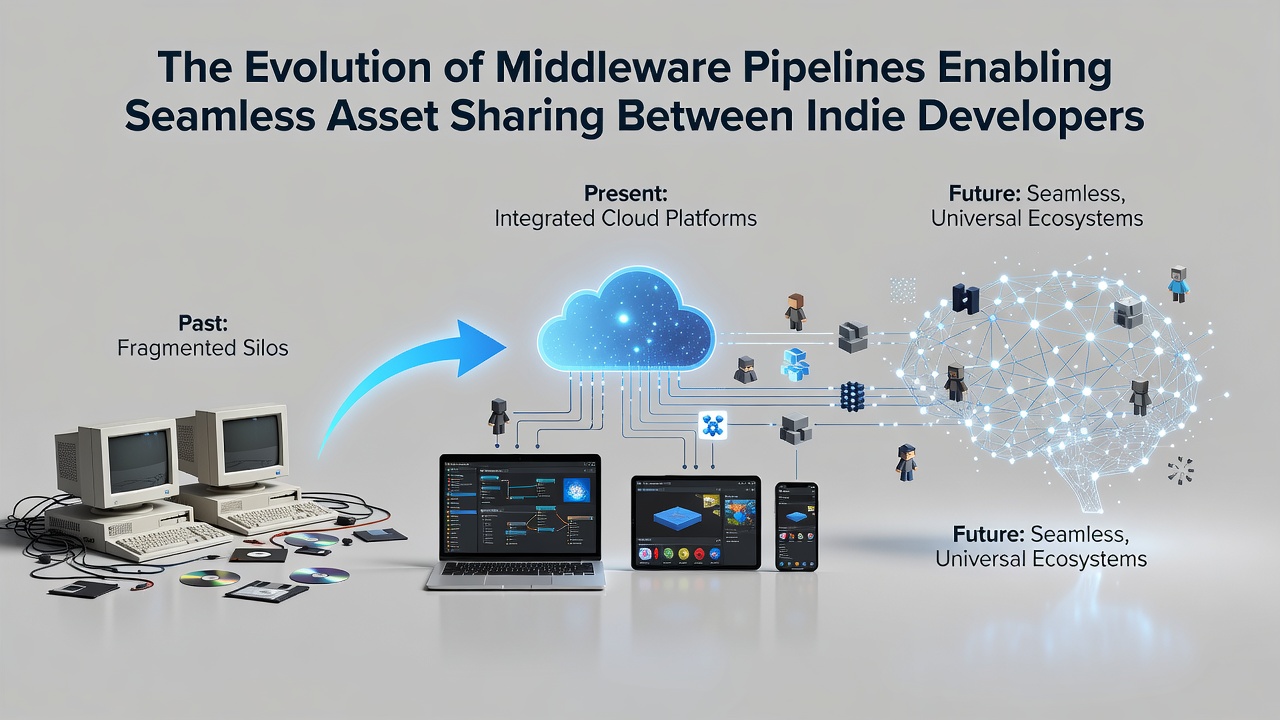
Engine-agnostic plugins emerged as another milestone, bridging tools like Unity and custom in-house solutions so that asset pipelines could ingest outputs from any source and redistribute them with hardware-appropriate modifications. One documented case involved a collective that integrated procedural generation modules directly into the middleware, enabling on-the-fly adjustments based on detected device capabilities during collaborative sessions. Such features minimized the friction that once arose when assets moved between ecosystems, supporting fluid iteration cycles that aligned with the pace of indie production.
Implementation Patterns Observed in 2026
By June 2026 middleware frameworks incorporate cloud-assisted validation services that scan incoming assets for compatibility issues across an expanding array of hardware profiles, flagging potential bottlenecks before they reach end devices. These systems draw on aggregated telemetry from participating developers to refine conversion heuristics over time, creating feedback loops that improve accuracy with each project cycle. Industry organizations such as the International Game Developers Association have compiled usage statistics showing increased participation from studios operating in hybrid environments, where asset sharing now occurs through secure, permissioned channels that respect contributor ownership.
Integration with containerized build environments has further streamlined deployment, allowing pipelines to spin up isolated instances for testing asset behavior on specific hardware combinations without local setup overhead. Developers working across regions report that these containers facilitate parallel testing on consoles and mobiles simultaneously, cutting down on sequential approval stages that previously slowed progress. Research from Australian academic groups underscores how such patterns scale effectively for teams lacking dedicated infrastructure staff, democratizing access to sophisticated asset management previously reserved for larger entities.
Supporting Infrastructure and Standards
Underlying hardware abstraction layers within contemporary middleware handle differences in memory architecture and rendering APIs through modular plugins that activate based on runtime detection. This design permits asset authors to work in a unified interface while the pipeline manages translation tasks in the background, preserving creative focus. Data compiled by North American research networks indicate that adoption of these layers correlates with shorter turnaround times between asset creation and cross-platform validation milestones.
Security protocols embedded in sharing mechanisms ensure that proprietary assets remain protected during transit and storage, employing encryption tied to contributor identities and project scopes. Middleware vendors have aligned these features with emerging interoperability guidelines from regulatory bodies in Canada, fostering trust among collaborators who contribute to shared repositories. The result manifests in expanded libraries where individual contributions compound across hardware variants without exposing source materials to unintended access.
Conclusion
Continued refinement of middleware pipelines centers on deeper embedding of machine learning for predictive asset adaptation, allowing systems to anticipate hardware demands based on historical project data. This trajectory supports indie developers in sustaining collaborative momentum across mixed ecosystems, where seamless sharing underpins efficient production without repeated reinvention of core assets. As standards evolve alongside device proliferation, the infrastructure for such exchanges stands positioned to accommodate further diversification in hardware targets through incremental, evidence-based updates.