SSD Throughput Gains Reshaping Practice Loops for Console Esports Athletes Bridging into PC Titles
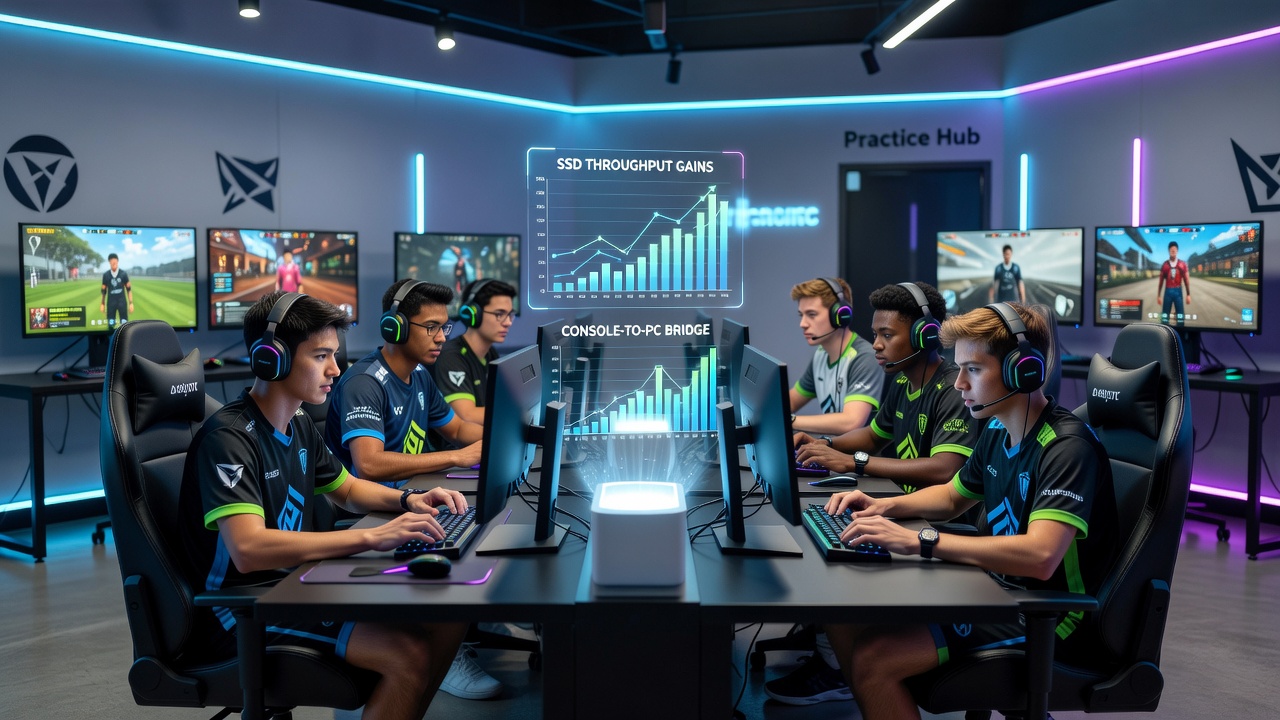
High-speed solid state drives continue to alter training routines as console esports competitors prepare for transitions into PC-based competitions, and throughput improvements allow repeated map loads, asset streaming, and data synchronization to occur without the interruptions that once fragmented sessions. Athletes who train primarily on consoles now complete full practice cycles in shorter windows because sequential read speeds above 7000 MB/s reduce wait times between rounds, while random access performance supports quick reloads during strategy reviews.
Storage Performance Metrics in Competitive Gaming Environments
Esports organizations track storage benchmarks as part of equipment standards, and recent figures show Gen4 and Gen5 NVMe drives delivering sustained throughputs that exceed earlier SATA and early PCIe models by factors of three to five times. Research from the University of Melbourne indicates these gains translate directly into higher repetition rates during aim trainers and scenario drills, since level assets finish loading before the next match timer expires. Console platforms equipped with custom SSD controllers achieve comparable results when paired with high-bandwidth interfaces, enabling athletes to maintain consistent pacing whether they remain on proprietary hardware or move toward open PC configurations.
Effects on Console-Based Practice Cycles
Practice loops on consoles traditionally suffered from longer initial loads and texture streaming pauses, yet newer internal storage solutions compress those intervals to under two seconds for most competitive titles. Observers note that teams now schedule additional scrimmage blocks within the same calendar day because cumulative downtime shrinks, and data synchronization between practice accounts completes during brief intermissions. The result appears in performance logs where session totals rise without extending overall training hours, and analysts record fewer instances of interrupted focus caused by hardware waits.
Platform Bridging for Transitioning Athletes
Athletes moving from console ecosystems to PC titles encounter differences in file structures and asset pipelines, but elevated SSD throughput mitigates friction during the adjustment period. Cross-platform libraries benefit when save states and replay files transfer at speeds that keep pace with network updates, allowing immediate continuation of drills across devices. Industry reports compiled by the Canadian Interactive Digital Entertainment Association document reduced setup times for hybrid rigs, where external SSD enclosures serve as portable caches that athletes carry between venues. This approach supports consistent muscle memory development because visual and audio cues remain synchronized regardless of the underlying platform.
Quantitative Insights from Recent Evaluations
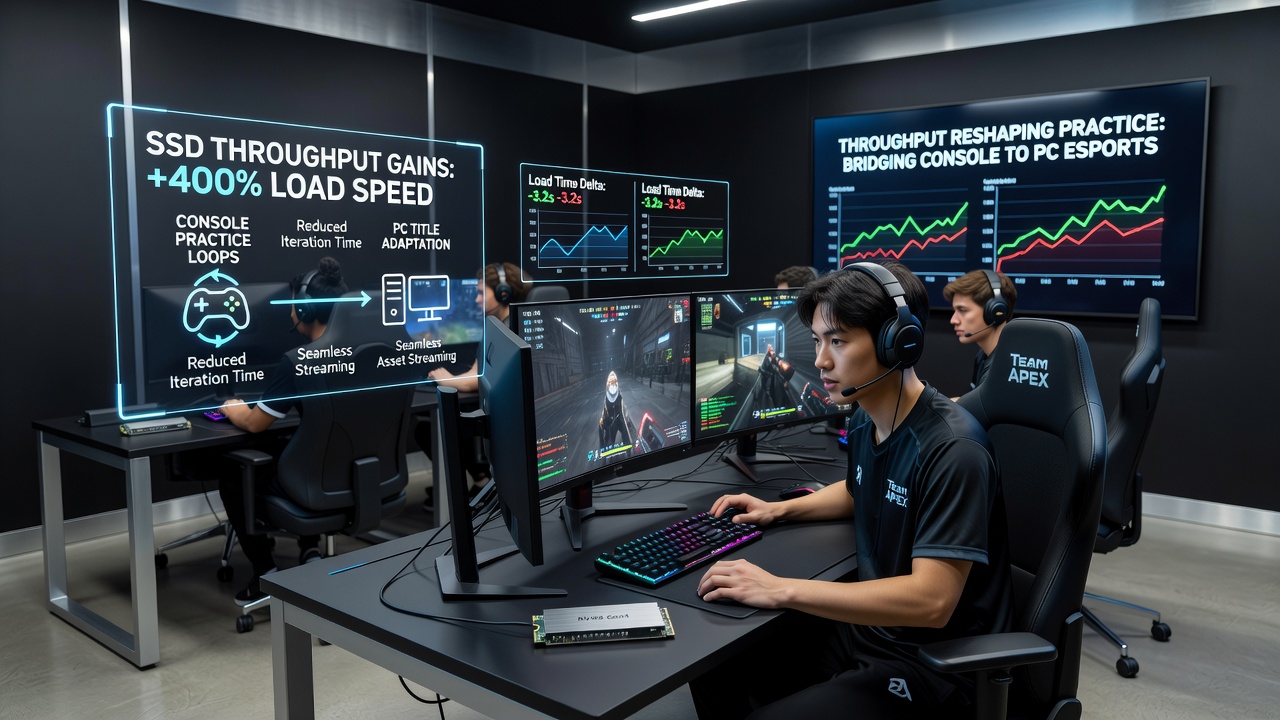
Measurements collected across multiple tournaments reveal that teams utilizing the latest storage configurations complete 15 to 25 percent more practice iterations per hour compared with groups still operating on legacy drives. According to findings published through the Fraunhofer Institute for Digital Media Technology, random 4K read performance proves especially critical during menu navigation and replay scrubbing tasks common in fighting game and shooter preparation. Those metrics also influence scouting workflows, since coaches review large volumes of recorded footage without encountering playback stalls that previously required separate rendering steps.
Integration Trends Observed Through Mid-2026
By June 2026 manufacturers plan wider deployment of drives featuring PCIe 5.0 interfaces and advanced caching algorithms tailored for gaming workloads, and early samples already demonstrate reduced thermal throttling during extended sessions. Esports facilities testing these components report smoother handoffs when athletes switch between stationary consoles and portable PC stations, because data migration tools leverage the higher bandwidth to finish overnight syncs before morning reviews begin. Training software developers incorporate direct storage APIs that bypass traditional operating system overhead, further amplifying the effective throughput available to end users during live drills.
Conclusion
Throughput advancements in solid state storage continue to compress the time required for iterative practice across console and PC environments, and organizations that adopt these components observe measurable increases in session density without corresponding rises in fatigue. The pattern holds across regions as governing bodies and equipment suppliers align specifications around faster interfaces, while athletes gain flexibility to refine skills on whichever platform hosts their next event. Continued refinement of controller firmware and file system optimizations will likely sustain this trajectory as competitive calendars grow denser through the remainder of the decade.