Procedural World-Building Tools Streamline Asset Generation for Expansive Titles Shared Across PC Rigs and Portable Handhelds in Long-Term Player Campaigns
Written by Iris Berger · Jul 30, 2026
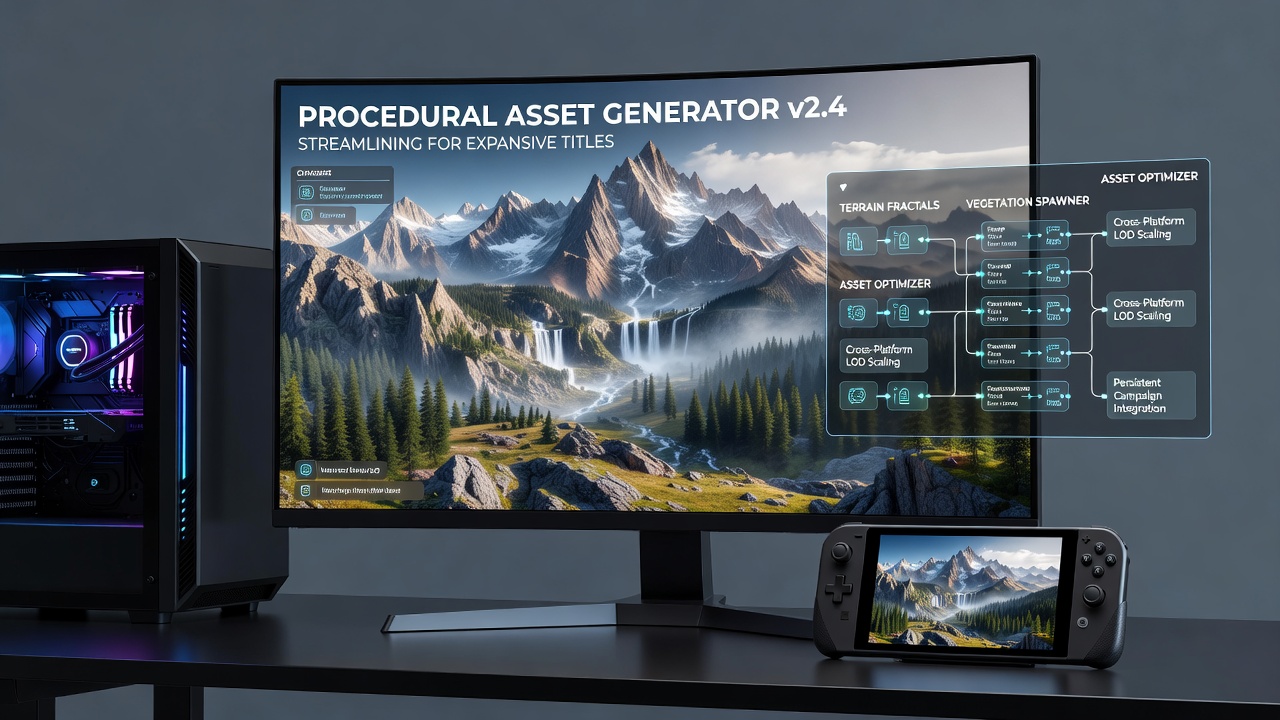
Procedural World-Building Tools Streamline Asset Generation for Expansive Titles Shared Across PC Rigs and Portable Handhelds in Long-Term Player Campaigns
Procedural world-building tools have evolved into core components of modern game engines, where algorithms generate terrain, structures, vegetation, and interactive elements on demand rather than relying solely on manual creation. These systems reduce file sizes while maintaining visual fidelity, which proves essential when titles must run consistently on high-end PCs alongside portable handhelds such as the ROG Ally and Steam Deck variants. Data from industry tracking shows that developers now integrate these tools into pipelines for games supporting campaigns that span hundreds of hours, allowing players to explore dynamically altered environments without repeated asset downloads.
Core Mechanisms Behind Procedural Asset Generation
Noise functions, L-systems, and graph-based node editors form the foundation of current procedural pipelines, enabling software to create varied landscapes and objects from seed values and rule sets. Studios apply these techniques in engines like Unreal Engine 5 and Unity, where tools such as PCG (Procedural Content Generation) frameworks handle everything from river networks to building interiors. Research indicates that this approach cuts manual modeling time by measurable percentages, according to reports compiled by the Entertainment Software Association, while preserving performance budgets required for cross-device compatibility.
Asset streaming layers further support long-term campaigns by loading only the procedural variants needed for a given play session. Players moving between a desktop rig and a handheld device experience synchronized world states because the underlying seeds and parameters travel with save data rather than full geometry files. This method keeps storage demands manageable on devices with limited SSD capacity, and it maintains coherence across extended narratives that evolve through player choices and time-based events.
Cross-Platform Optimization for PC and Handheld Hardware
Engine middleware now includes device-specific scaling modules that adjust procedural density and LOD (level of detail) settings automatically. When a campaign session shifts from a high-power PC to a handheld, the same seed data produces simplified meshes and textures that respect thermal and power constraints without requiring separate asset libraries. Observers note that middleware updates released ahead of July 2026 events demonstrated improved synchronization protocols, allowing seamless handoff of world states between stationary and portable hardware during ongoing playthroughs.
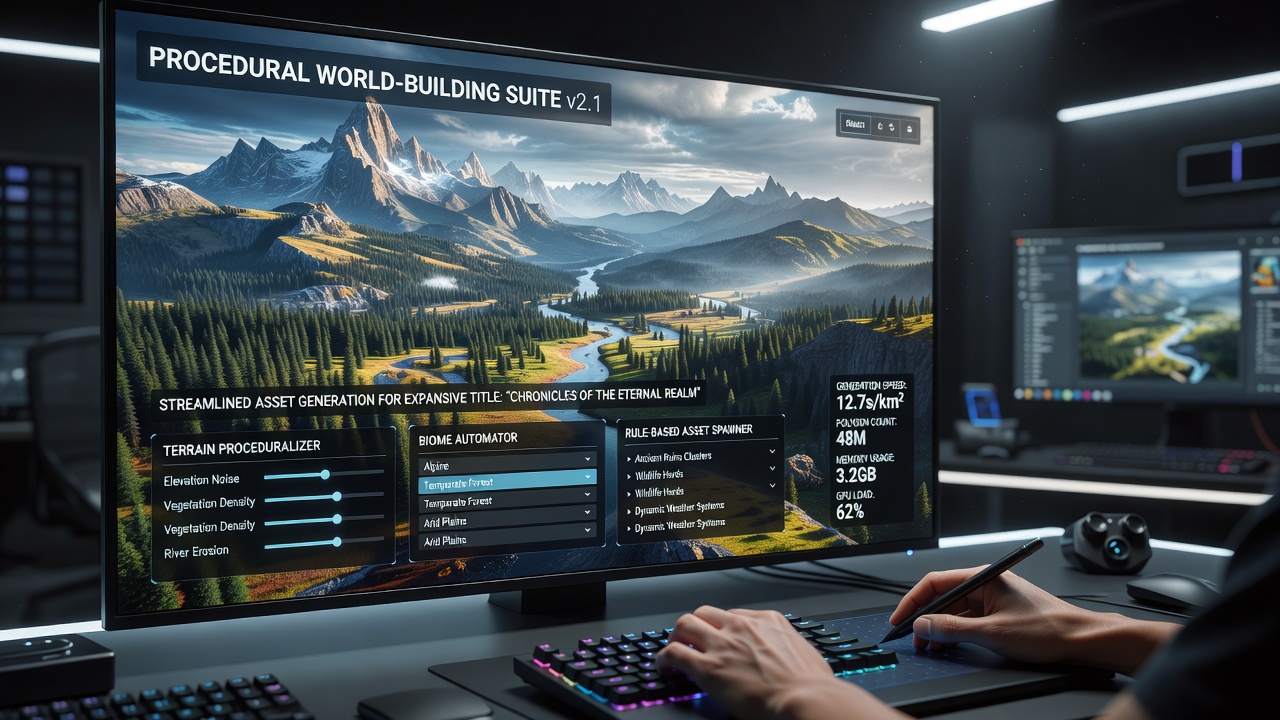
Shader compilation routines and texture synthesis algorithms have been refined to deliver visual consistency across mixed hardware, as documented in technical papers presented at recent graphics conferences. These routines generate surface details at runtime using parameters stored in player profiles, which means a forest canopy viewed on a portable screen retains structural similarity to its PC counterpart even when polygon counts differ. Figures from hardware compatibility studies reveal that titles employing these layered procedural systems achieve stable frame rates on both device classes during prolonged campaign segments.
Support for Extended Player Campaigns and Multi-Session Continuity
Long-term campaigns benefit because procedural systems can regenerate or mutate world elements based on persistent variables such as player reputation, completed quests, or seasonal timers. This reduces the need for pre-authored content that would otherwise balloon install sizes beyond portable storage limits. Case examples include open-world titles where entire regions shift after major story milestones, with changes propagating identically whether the player resumes on a desktop setup or a handheld during travel.
Version control integrations track procedural parameters alongside traditional assets, ensuring that updates pushed to live services apply uniformly across platforms. Community servers running custom rule sets demonstrate how these tools allow persistent worlds to evolve over months without requiring full client redownloads. According to a joint industry analysis released by the Interactive Software Federation of Europe, adoption of such parameter-driven generation has correlated with higher retention metrics in titles designed for multi-device access.
Implementation Examples and Technical Integration Patterns
Developers working on expansive fantasy and sci-fi projects have incorporated node-graph editors that let designers define rules for city layouts, cave networks, and quest-relevant landmarks. These graphs execute at load time or during travel transitions, producing unique configurations that remain compatible with save files shared between PC and handheld hardware. Performance telemetry collected during beta phases shows reduced memory spikes when procedural caching layers prioritize frequently accessed regions.
Integration with existing middleware such as Houdini Engine plugins further extends capabilities, allowing studios to bake procedural variations into runtime data streams that handheld processors can evaluate efficiently. This workflow supports campaigns where players invest hundreds of hours because world changes accumulate without exhausting local storage or requiring constant network fetches.
Conclusion
Procedural world-building tools continue to reshape how expansive titles manage asset demands across PC rigs and portable handhelds, particularly for campaigns that unfold over extended periods. The combination of seed-based generation, adaptive scaling, and synchronized parameters delivers consistent experiences while controlling file sizes and development overhead. As hardware evolves and player expectations for seamless multi-device play increase, these systems provide the technical foundation that keeps large-scale worlds accessible and coherent.