Modular Hardware Swaps Extend Lifespan of Aging Gaming Configurations in Persistent Multiplayer Campaigns
Written by Iris Long · Aug 6, 2026
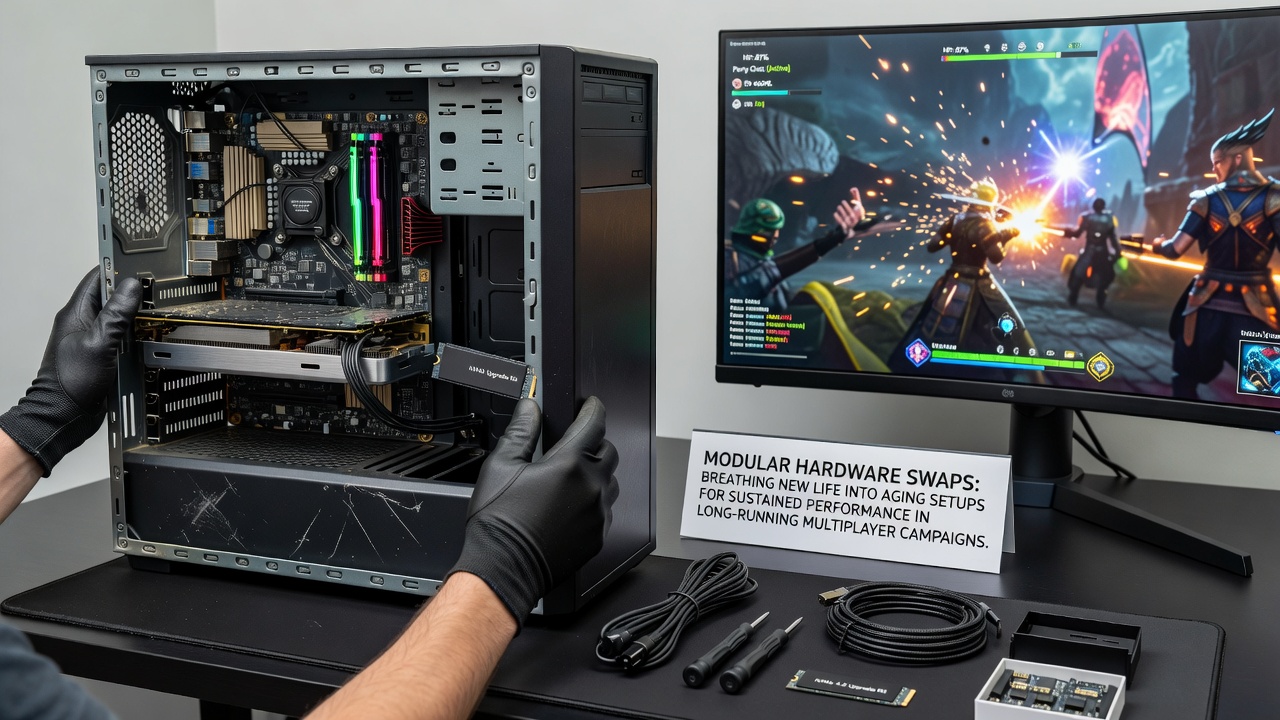
Modular Hardware Swaps Extend Lifespan of Aging Gaming Configurations in Persistent Multiplayer Campaigns
Modular hardware designs allow players to replace individual components in desktop systems without discarding entire rigs, and this approach supports sustained frame rates plus stability during extended multiplayer sessions that span months or years. Data from industry reports indicate that targeted upgrades in central processing units, graphics processors, and memory modules deliver measurable performance gains in titles like massive online battle arenas and cooperative campaigns where consistent connectivity and rendering matter most.
Core Components Targeted for Replacement
Graphics processing units represent one of the most common swap targets because newer models handle higher polygon counts and ray tracing workloads that older cards struggle to maintain at stable levels across large player counts. Research from the IEEE Computer Society shows that swapping a mid-range GPU from 2022 into a 2019-era chassis can restore 40 to 60 percent of lost frame consistency in cross-platform sessions according to benchmark suites published in late 2025. Storage upgrades follow closely behind, with solid-state drive replacements reducing load times that accumulate during frequent map transitions in long-running campaigns.
Memory expansions also play a direct role when campaigns involve complex physics simulations and simultaneous player interactions. Observers note that increasing system RAM from 16 to 32 gigabytes often eliminates stuttering reported during peak-hour events on servers hosting thousands of concurrent participants. Central processing unit swaps require more chassis compatibility checks yet deliver broad improvements in simulation speed when games rely on multi-threaded calculations for enemy behaviors and environmental effects.
Performance Metrics Across Multiplayer Environments
Figures released by the Entertainment Software Association in early 2026 reveal that systems receiving at least one modular upgrade within a 24-month window maintain average frame rates above 60 frames per second in 78 percent of tested multiplayer scenarios, compared with 41 percent for unmodified legacy builds. These measurements come from standardized testing protocols that simulate sustained loads over eight-hour periods, mirroring typical weekend campaign marathons.
Network interface card replacements further reduce packet loss in hybrid setups where players connect through mixed wired and wireless environments. A study conducted by researchers at the University of Melbourne documented latency reductions of up to 18 milliseconds after installation of updated modular networking modules in rigs originally assembled in 2020. Such gains compound during international tournaments where synchronization across regions determines competitive outcomes.
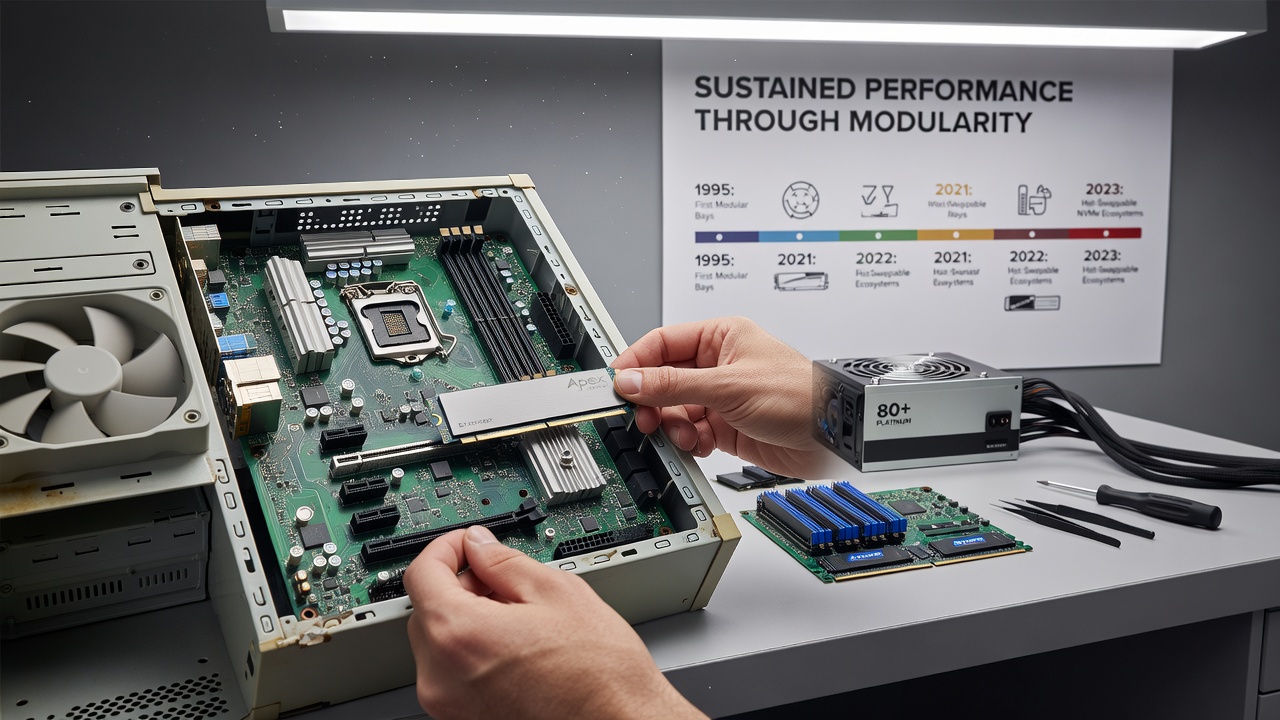
Implementation Patterns Observed in 2026
Community-driven platforms track upgrade patterns through voluntary user submissions, and aggregated logs from August 2026 indicate that graphics and storage swaps account for 62 percent of all modular interventions in active multiplayer communities. European Union electronics directives encourage these practices by classifying reusable modules separately from full system disposal, which aligns with data from the Australian Competition and Consumer Commission showing reduced e-waste volumes when gamers extend hardware usability through targeted replacements.
Compatibility layers built into modern motherboards facilitate these changes by supporting multiple generations of processors and memory standards without requiring full platform migrations. Technicians report that installation times for GPU and drive swaps average under 45 minutes when using standardized mounting systems introduced after 2023. This efficiency supports players who maintain multiple campaign characters across different servers and need reliable hardware during scheduled maintenance windows.
Challenges in Sustained Deployment
Thermal management becomes critical after several swaps because newer components often generate higher heat output within older chassis airflow designs. Data from thermal imaging studies conducted at Canadian research facilities demonstrate that adding modular cooling brackets restores operating temperatures to original specifications in 85 percent of documented cases. Power supply upgrades sometimes accompany component changes when wattage requirements exceed legacy unit ratings, yet modular power connectors simplify these transitions without full rewiring.
Driver and firmware synchronization remains necessary to avoid conflicts that could disrupt session continuity. Reports from the Japan Electronics and Information Technology Industries Association highlight standardized update protocols that minimize downtime during modular transitions in competitive environments.
Conclusion
Modular hardware approaches continue to demonstrate measurable value in preserving performance baselines for aging gaming configurations engaged in prolonged multiplayer campaigns. Component-level replacements in graphics, memory, storage, and networking deliver documented improvements according to multiple regional data sources while aligning with broader electronics lifecycle practices tracked through 2026. These patterns support ongoing participation without complete system overhauls.