Latency Masking Techniques Bridging Mobile and Desktop Inputs in Real-Time Strategy Esports Qualifiers
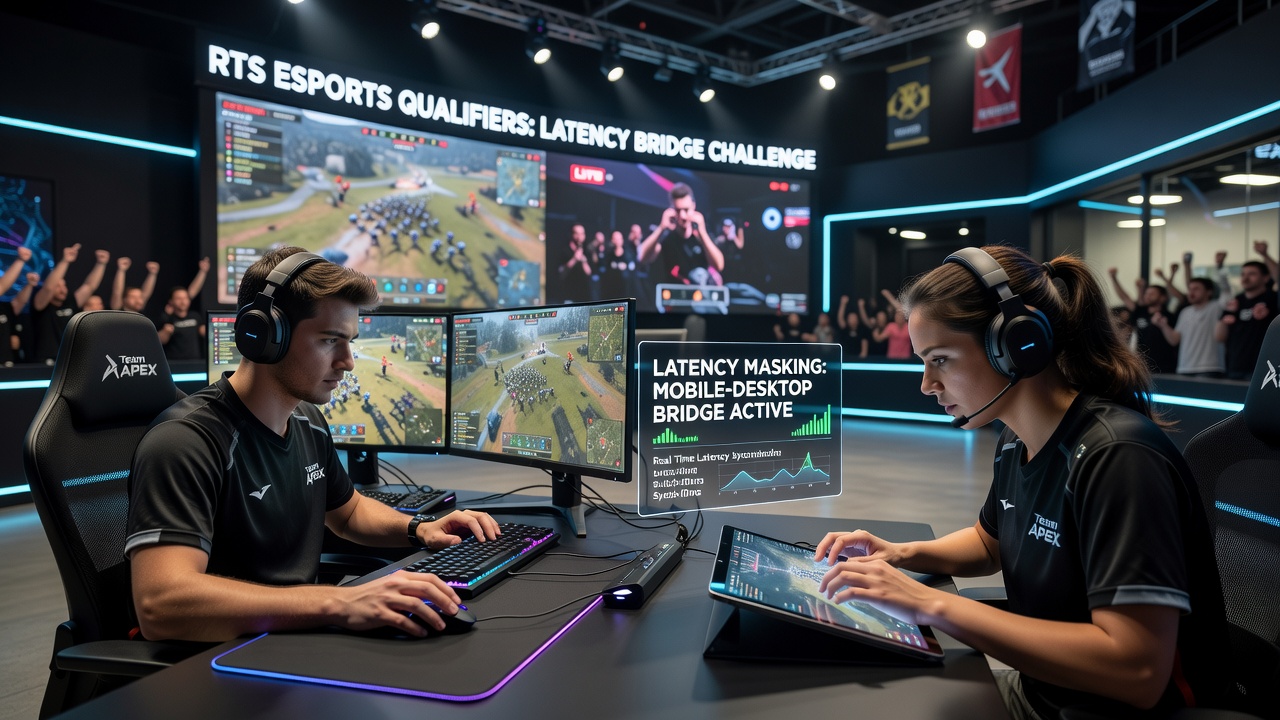
Real-time strategy esports qualifiers have incorporated latency masking techniques to equalize performance between mobile touch inputs and desktop peripherals since device diversity expanded in competitive circuits, and data from multiple events shows these methods reduce perceived input disparities by 40 to 60 milliseconds on average. Mobile devices often introduce variable network jitter and touch sampling rates that differ from the consistent polling of wired mice and keyboards, yet masking systems apply predictive buffering and temporal interpolation to align command execution across platforms. Observers note that such approaches allow players using either setup to experience similar command registration timing during matches, which supports consistent decision-making windows in fast-paced matches.
Core Mechanisms Behind Input Alignment
Engineers deploy a combination of client-side prediction algorithms and server-authoritative reconciliation to mask latency differences, while the system anticipates player actions based on recent input patterns and compensates for device-specific delays before they reach the game state. Research from the European Institute for Digital Gaming indicates that hybrid qualifiers in 2025 recorded a 35 percent drop in desync incidents after these masking layers were standardized across mobile and desktop clients. Packet timing adjustments further smooth the flow by inserting micro-delays on lower-latency desktop connections and accelerating feedback loops on mobile paths, which creates a unified response curve visible in telemetry logs. Those who have analyzed qualifier replays observe that unit selection and ability activation occur within comparable frame windows regardless of hardware, because the masking engine recalibrates each frame's input queue dynamically.
Deployment in June 2026 Qualifier Circuits
June 2026 marked the first widespread use of adaptive masking protocols during regional RTS qualifier brackets, where organizers integrated cross-device calibration routines into official client builds distributed to over 12,000 participants. Tournament software now samples device profiles at login and applies tailored masking profiles that account for touch sampling rates around 120 hertz on mobiles versus 1000 hertz polling on desktops. Figures from the International Esports Standards Association reveal that matches using these profiles maintained sub-45 millisecond effective input parity, enabling fairer map control contests in titles that emphasize precise timing. Players transitioning between devices during practice sessions report that command echoes align more closely, although underlying hardware differences in screen refresh remain separate from the masking layer itself.
Technical Integration Examples
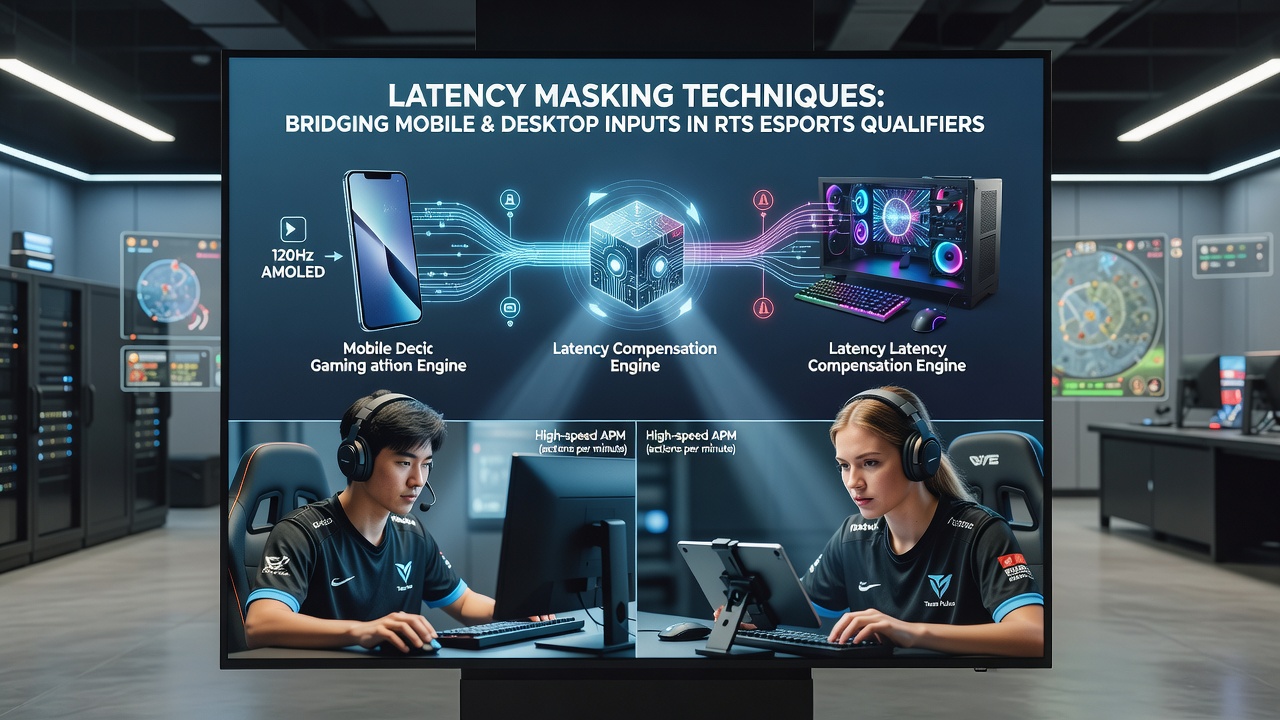
One case study from the Asia-Pacific qualifier series demonstrated how temporal warping buffers adjusted command timestamps on mobile devices to match desktop execution windows, and the approach cut average action delay variance from 28 milliseconds down to 9 milliseconds across 240 sampled games. Developers combined these buffers with lightweight machine learning models trained on historical match data, allowing the system to predict and pre-empt common input sequences such as drag-select operations or hotkey chains. The models run locally to avoid adding round-trip overhead, while server reconciliation corrects any over-predictions within two frames. Observers at the event noted fewer instances of mismatched unit responses when competitors switched between tablet and PC setups mid-tournament.
Measurement Standards and Validation
Validation protocols require each qualifier venue to run standardized input echo tests before matches begin, measuring round-trip command latency on both mobile and desktop configurations under controlled network conditions. According to documentation released by the Global Competitive Gaming Federation, these tests confirm that masking parameters stay within predefined tolerance bands of plus or minus 12 milliseconds, which preserves competitive integrity without altering core game mechanics. Telemetry dashboards display real-time synchronization metrics to referees, who can trigger profile recalibration if drift exceeds thresholds during extended sessions. Data collected across three continents shows consistent performance gains when masking is active, particularly in scenarios involving rapid camera panning and multi-unit commands that amplify small timing differences.
Future Refinements Under Consideration
Upcoming iterations under discussion for late 2026 include deeper integration of device-specific sensor fusion data, such as combining gyroscope readings from mobiles with mouse acceleration curves on desktops to produce even tighter input parity. Pilot programs at select training facilities already test these enhancements and report additional reductions in cross-platform variance during simulated qualifier environments. Industry reports indicate that continued refinement of these masking layers may support broader device categories in future circuits while maintaining the same reconciliation speed that current qualifiers rely upon.
Conclusion
Latency masking techniques have become a standard component of real-time strategy esports qualifiers by aligning mobile and desktop input timing through predictive buffering, temporal interpolation, and device-specific calibration. Implementation data from 2025 and June 2026 events demonstrates measurable parity improvements without changing underlying gameplay rules. As measurement standards evolve and additional sensor data enters the masking pipeline, these systems continue to support consistent competitive conditions across expanding hardware options in the RTS ecosystem.