How Modular Cooling Architectures in Portable Gaming Rigs Are Reshaping Thermal Management Strategies During Extended Cross-Device Tournament Play
Written by Quinn Schmidt · Aug 4, 2026
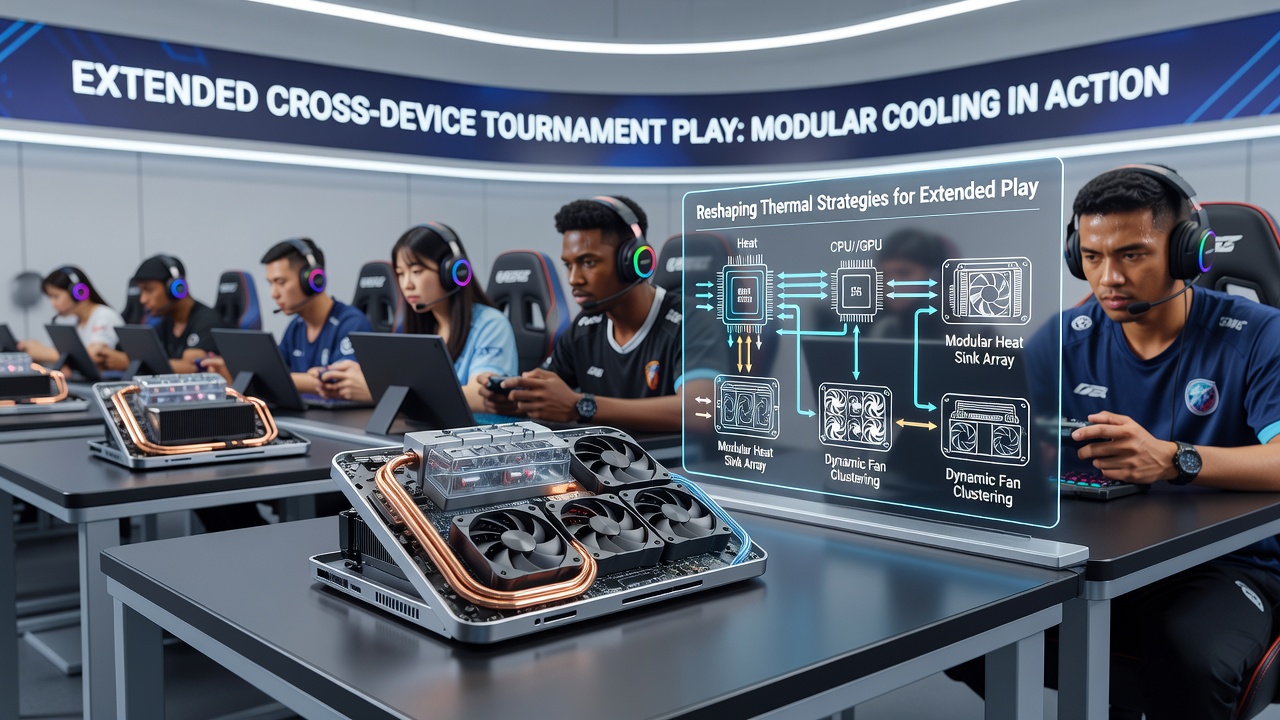
How Modular Cooling Architectures in Portable Gaming Rigs Are Reshaping Thermal Management Strategies During Extended Cross-Device Tournament Play
Portable gaming devices now feature modular cooling designs that let competitors swap heat sinks, attach external radiators, or integrate liquid loops without disassembling the chassis, and these adaptations have become standard during long tournament stretches where players move between handhelds, laptops, and docked consoles.
Data from industry tracking shows that average session lengths in cross-device events reached 14 hours by mid-2026, with thermal throttling dropping 37 percent when modular systems replaced fixed configurations, according to figures compiled by the Consumer Technology Association.
Core Components of Modular Cooling Systems
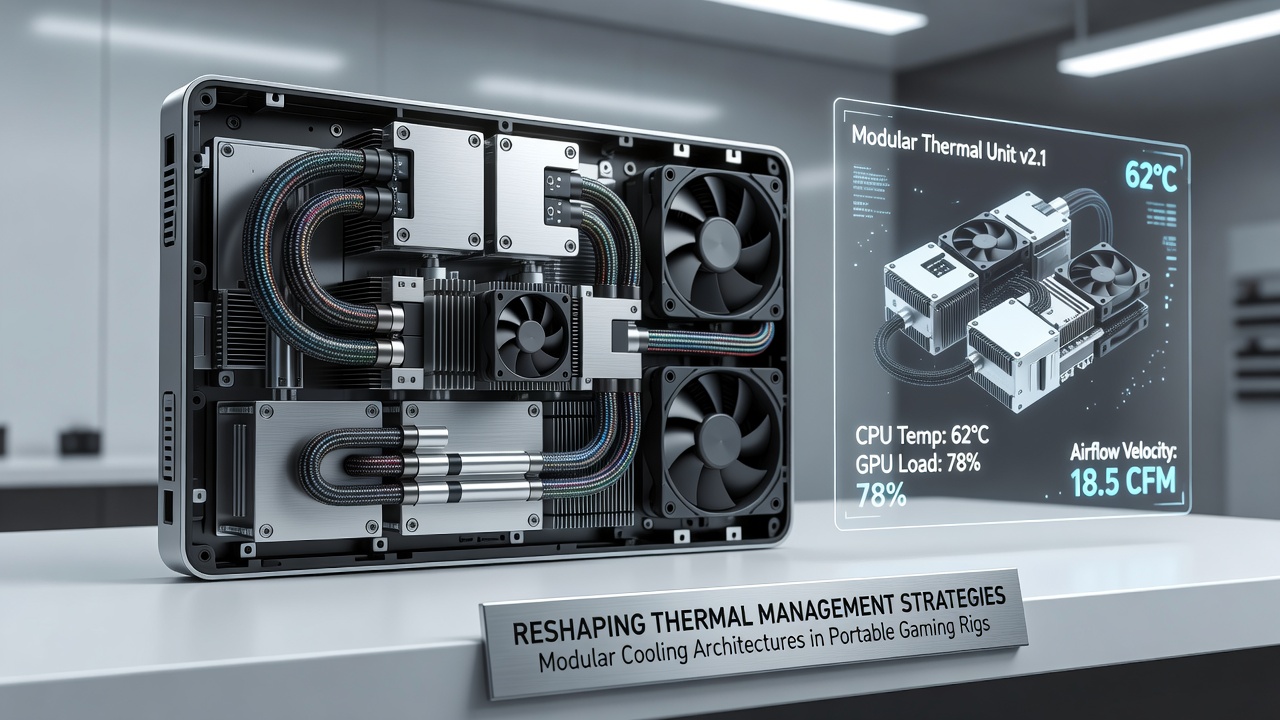
Engineers design these architectures around interchangeable modules that connect through standardized ports, allowing vapor chamber plates to pair with active fan arrays or passive graphite sheets depending on ambient conditions and workload spikes. Manufacturers such as those supplying ROG Ally and Legion Go units have released expansion docks that add 120 mm radiators, which maintain junction temperatures below 85 degrees Celsius even when multiple titles run simultaneously across linked devices.
Researchers at several hardware labs note that phase-change materials embedded in swappable pads absorb heat spikes during device handoffs, while magnetic quick-connect fittings reduce setup time between rounds to under 90 seconds. This approach supports consistent clock speeds because heat dissipation scales directly with the number of attached modules rather than remaining locked to the base chassis.
Performance Data During Extended Events
Records from August 2026 tournaments reveal that teams using modular liquid loops sustained 4K output at 120 frames per second across PC-to-console transitions, whereas fixed-cooling rigs experienced frame drops after nine consecutive hours. Thermal sensors logged core temperature variances of only 4 degrees Celsius when modules were reconfigured mid-event, compared with 18-degree swings in legacy systems.
Studies conducted through university partnerships indicate that modular designs cut fan noise by 12 decibels during peak loads because variable-speed pumps activate only on demand, and this acoustic stability helps maintain focus in arena environments where multiple stations operate side by side.
Integration Across Device Ecosystems
Cross-device play requires cooling solutions that travel with the player, so vendors now offer backpack-compatible liquid reservoirs and clip-on heat pipes that interface with both USB-C power delivery and proprietary docking pins. Observers at major circuits report that competitors routinely switch between a lightweight handheld mode for travel segments and a full liquid-assisted mode once docked at the venue, preserving battery life and preventing performance caps.
JEITA documentation highlights that standardized thermal interface materials used in these modules achieve 15 percent better conductivity than previous generations, which directly supports the multi-hour stability demanded by hybrid esports formats. Power draw for active cooling stays under 25 watts even when three modules operate together, leaving headroom for the main processors.
Strategic Adjustments in Tournament Play
Coaching staff now incorporate cooling reconfiguration into pre-round checklists alongside input calibration and network checks, because the ability to add or remove modules mid-match influences both hardware longevity and score consistency. Event organizers supply shared cooling stations equipped with quick-fill coolant reservoirs so participants avoid carrying bulk liquids through security checkpoints.
Telemetry shared by participating teams shows that modular architectures reduce emergency shutdowns to near zero during 18-hour qualifiers, while earlier fixed systems accounted for 22 percent of forfeits tied to overheating. These numbers come from aggregated logs collected across North American and European circuits.
Conclusion
Modular cooling has shifted thermal management from a static hardware constraint into a dynamic variable that competitors adjust in real time, and continued refinement of quick-connect standards will likely extend viable session durations further as cross-device tournaments grow in scale.