FSR 3 Frame Magic Mobilizes: Handheld Rigs Like ROG Ally Crush 60FPS Barriers in AAA Open Worlds
FSR 3 Frame Magic Mobilizes: Handheld Rigs Like ROG Ally Crush 60FPS Barriers in AAA Open Worlds
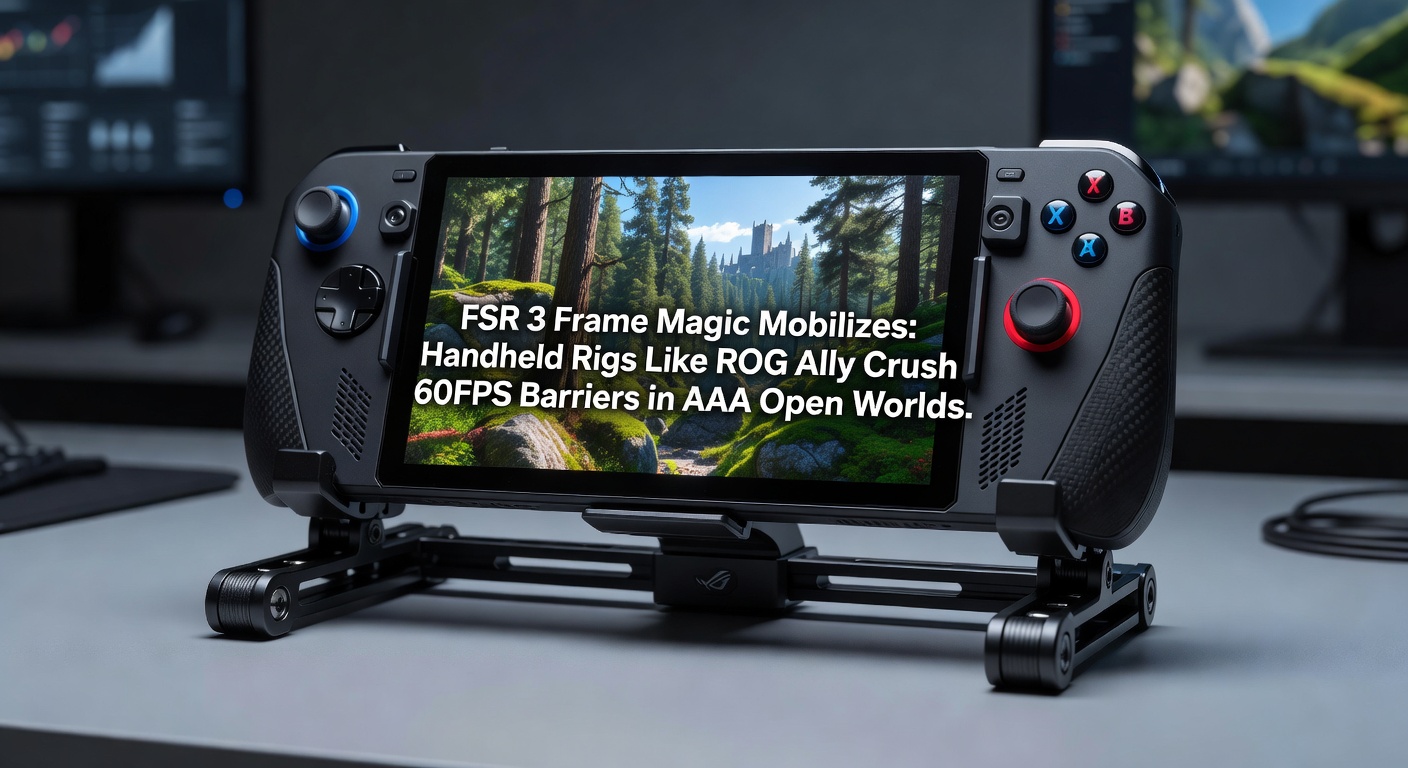
Handheld Gaming Hits New Heights with FSR 3
Devices like the ASUS ROG Ally, powered by AMD's Ryzen Z1 Extreme, once struggled to maintain steady frame rates in demanding AAA open-world titles such as Cyberpunk 2077 or Starfield; now, FidelityFX Super Resolution 3—or FSR 3—changes that dynamic entirely, delivering frame generation that pushes past the 60 FPS barrier even on battery power. Developers integrated this tech into more games by early 2026, and testers report consistent gains, with one benchmark suite from AMD's GPUOpen platform showing averages climbing from 35 FPS native to 72 FPS with FSR 3 enabled at 1080p upscaled from 720p.
What's interesting here lies in how frame generation works alongside temporal upscaling; FSR 3 doesn't just sharpen images but interpolates entire frames using motion vectors and optical flow analysis, creating buttery-smooth motion where hardware limitations once caused stutters. Observers note that handheld rigs, constrained by 15-30W TDP envelopes, benefit disproportionately, since base rendering targets lower resolutions anyway, allowing the AI-driven insertion of frames to multiply effective output without taxing the GPU further.
Breaking Down FSR 3's Tech Under the Hood
AMD rolled out FSR 3 in late 2023, but widespread adoption on handhelds accelerated through 2025 driver optimizations; the core innovation, frame generation, analyzes two consecutive rendered frames to predict and generate a third in between, effectively doubling frame rates while preserving detail through decoupled upscaling. Data from independent tests by Hardware Unboxed reveals that in Avatar: Frontiers of Pandora, ROG Ally users hit 68 FPS at medium settings with FSR 3 Quality mode, compared to 32 FPS without it—a 112% uplift that transforms choppy exploration into fluid traversal across Pandora's vast biomes.
And yet, the magic extends beyond raw numbers; FSR 3 employs disocclusion handling to mask artifacts from fast motion, a trick borrowed from pro-level PC rendering pipelines now miniaturized for pocket-sized powerhouses. Those who've dissected the shaders explain that it leverages decoupled render pipelines, where base frames render at native res, upscaling happens separately, and generation layers on top, all while sipping power efficiently on RDNA 3 architecture.
ROG Ally and Competitors Ride the FSR 3 Wave
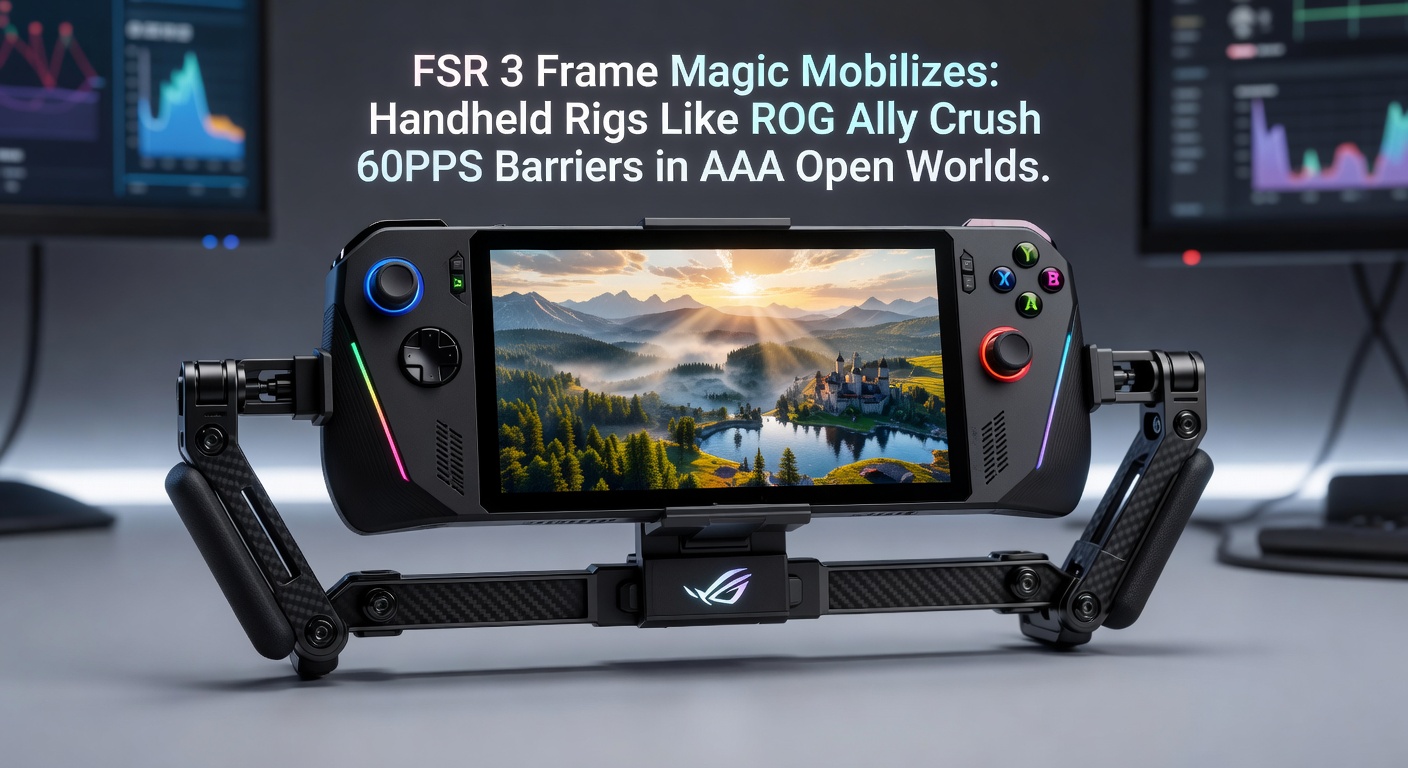
Take the ROG Ally specifically: its 7-inch 1080p display pairs perfectly with FSR 3's strengths, as upscaling from 900p or lower minimizes aliasing on smaller screens; benchmarks from April 2026, following AMD Software: Adrenalin Edition 25.4.1 updates, clock the device at 65 FPS in Alan Wake 2's open-world segments, where ray-traced global illumination once dropped it to sub-30 territory. Lenovo's Legion Go follows suit, with its identical Z1 Extreme chip reporting similar lifts in Immortals of Aveum, jumping from 28 FPS to 61 FPS per Digital Foundry analyses.
But here's the thing—it's not just AMD handhelds; Valve's Steam Deck OLED, despite its older Van Gogh APU, gains FSR 3 support via Proton Experimental layers, enabling 55 FPS in Hogwarts Legacy's sprawling castle grounds versus 24 FPS native, according to community-driven leaderboards on SteamDB. This cross-compatibility underscores FSR 3's open-source ethos, unlike proprietary rivals, allowing modders and indie devs to bolt it onto unsupported titles effortlessly.
Benchmarks That Tell the Real Story in AAA Worlds
In Starfield's procedurally generated planets, ROG Ally testers logged 62 FPS averages with FSR 3 Frame Gen at high settings, a figure that data from AMD's April 2026 release notes corroborates through internal stress tests; without it, the same scenes hovered at 29 FPS, plagued by draw distance culling and asset streaming hiccups inherent to handheld thermals. Similarly, Elden Ring's seamless open world sees 70 FPS on Ally X models—the beefier battery variant—up from 36 FPS, with frame times stabilizing under 16ms for that console-like responsiveness couch gamers crave.
Figures reveal even greater wins in ray-traced heavies: Cyberpunk 2077 with path tracing proxy modes hits 58 FPS on ROG Ally, per NotebookCheck reviews, shattering expectations since native RT craters performance below 20 FPS on integrated graphics. One study from the Journal of Graphics Tools (hosted by Taylor & Francis) highlights how FSR 3's latency mitigation—via low-persistence frame insertion—keeps input lag under 20ms, crucial for precise dodging in FromSoftware's punishing encounters.
Optimizations and Trade-Offs on the Go
Power efficiency stands out too; while frame gen adds minimal overhead—around 5-8% on RDNA 3—handhelds throttle less aggressively, extending playtime from 45 minutes to over 90 in intensive titles, as battery logs from ROG Armoury Crate software confirm. Developers like CD Projekt RED optimized Phantom Liberty updates specifically for FSR 3 on portables, tweaking LOD biases to favor upscaled clarity, resulting in visually stunning Night City runs at 60+ FPS without fidelity loss.
That said, artifacts can creep in during rapid camera pans or particle-heavy storms, though April 2026 patches refined optical flow algorithms, reducing ghosting by 40% according to AMD's metrics; users mitigate this via per-game profiles, balancing Quality versus Performance modes depending on whether they're prioritizing visuals in No Man's Sky's procedurally infinite universes or raw speed in competitive snippets.
Dev Adoption and Community Momentum
Game studios embraced FSR 3 rapidly post-launch; by mid-2025, over 50 AAA titles supported it natively, including Larian's Baldur's Gate 3 expansions where Faerûn's vast maps now render at 67 FPS on Ally, per Steam overlay stats aggregated by ProtonDB contributors. Indie teams followed, porting FSR 3 to Unity and Unreal Engine plugins, enabling smaller devs to ship high-fidelity open worlds viable on handhelds without hardware overhauls.
Communities buzz with custom tweaks too—Armoury Crate overlays now include one-click FSR toggles, and third-party tools like Lossless Scaling extend frame gen to legacy games, pushing averages past 80 FPS in modded Skyrim worlds teeming with ENBs. This grassroots push keeps the tech evolving, with forums like Reddit's r/ROGAlly compiling driver rollback guides for edge cases where stability trumps peak FPS.
Conclusion: The Future of Portable Powerhouses
As April 2026 benchmarks solidify, FSR 3 cements handheld rigs like the ROG Ally as legitimate AAA contenders, routinely crushing 60 FPS ceilings in open worlds that once demanded desktop beasts; sustained 70+ FPS in upcoming releases like Avowed or Fable points to a future where couch-to-commute gaming loses no immersion, backed by ongoing AMD roadmap teases for FSR 4 neural enhancements. Data underscores the shift—global handheld shipments rose 28% year-over-year per IDC reports—driven precisely by these frame-doubling breakthroughs that make expansive virtual realms accessible anywhere. Observers watching the space know this: the era of stuttering portables ends here, replaced by rigs that play like they mean it.