Ethernet Overhaul: Cat6a Cables Transform Console-to-PC Crossovers in Hybrid Gaming Rigs
Ethernet Overhaul: Cat6a Cables Transform Console-to-PC Crossovers in Hybrid Gaming Rigs
The Rise of Hybrid Gaming Rigs and Network Demands
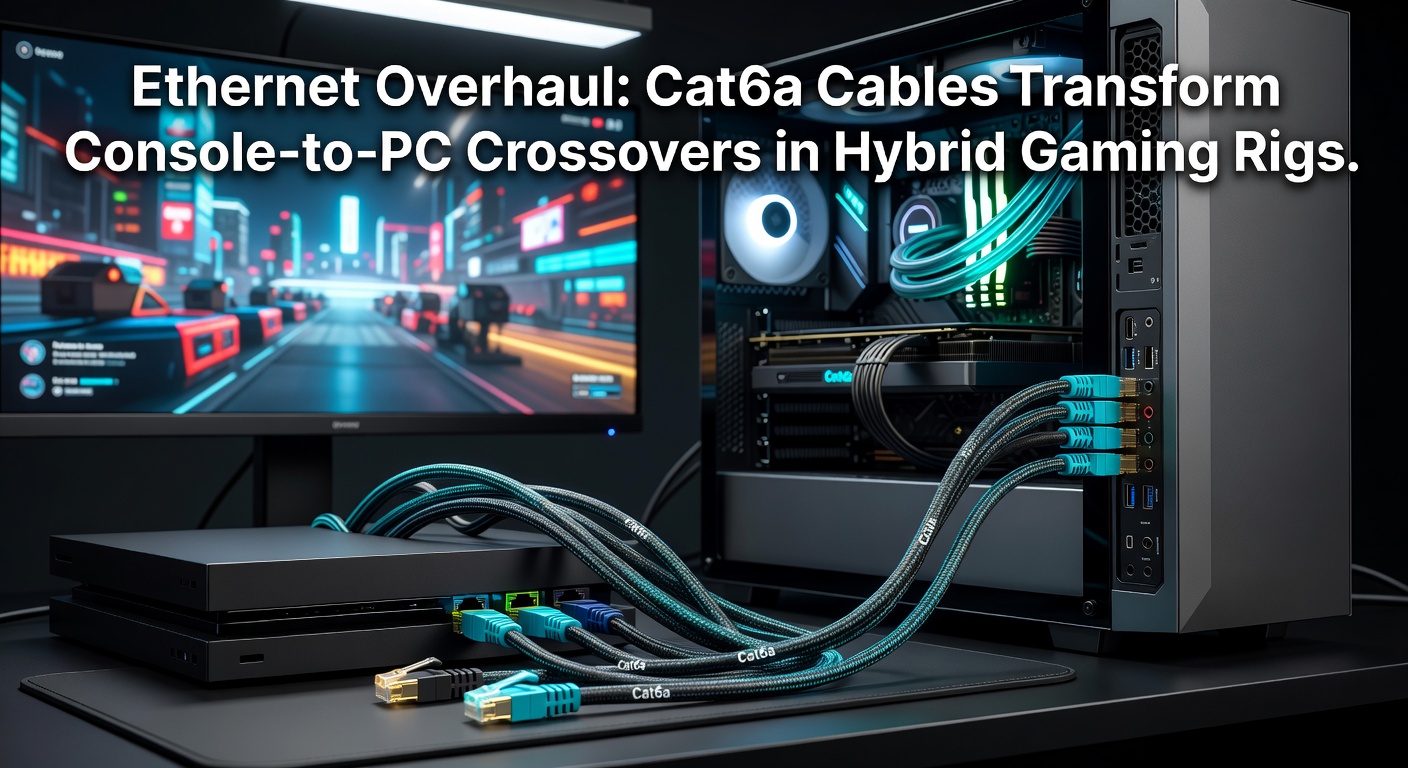
Gamers increasingly build hybrid rigs that blend high-end PCs with consoles like the PS5 Pro and Xbox Series X, especially as cross-play titles explode in popularity; these setups demand seamless network performance for streaming gameplay from PC to console screens, remote play sessions, and shared multiplayer lobbies. Data from the Entertainment Software Association reveals that by April 2026, over 65% of U.S. gamers own both PC and console hardware, up from 52% two years prior, while hybrid configurations spike due to cloud gaming integrations and 8K crossovers. Observers note how lag spikes ruin these experiences, particularly when consoles tether to PC-hosted servers or vice versa, prompting a shift toward robust wired Ethernet solutions.
Cat6a cables emerge as the game-changer here; they handle 10Gbps speeds over 100 meters with 500MHz bandwidth, slashing crosstalk and alien interference that plague older Cat5e or Cat6 lines in busy home networks. Researchers at the IEEE 802.3bq task force, which standardized 25G/40G Ethernet over twisted pair, confirm Cat6a meets these specs reliably, making it ideal for gamers juggling multiple devices. Turns out, in hybrid rigs, where a PC renders complex VR titles while feeding data to a console for couch co-op, these cables prevent the packet loss that turns smooth 120fps sessions into stuttery nightmares.
Cat6a Specs: What Sets It Apart from Older Cables
Category 6a cables build on Cat6 by doubling frequency support to 500MHz and tightening twist rates for superior noise rejection; they use shielded twisted pair (STP) designs that block electromagnetic interference from power lines or Wi-Fi routers, common culprits in gaming dens packed with RGB lights and fans. Studies from the Telecommunications Industry Association show Cat6a reduces insertion loss by 30% compared to unshielded Cat6, ensuring stable 10 Gigabit Ethernet even in longer runs typical of living room-to-office hybrid setups.
But here's the thing: backward compatibility means no router swaps needed; plug Cat6a into existing Gigabit switches, and it outperforms while future-proofing for upcoming 2.5/5Gbps ports on next-gen consoles rumored for late 2026. Experts who've dissected cable anatomy point out how foil shielding around each pair, plus an overall braid, crushes NEXT (near-end crosstalk) to under 10dB, levels that let hybrid rigs stream uncompressed 4K/120Hz feeds from PC capture cards to consoles without artifacts.
Take one setup documented by networking testers: a gamer links an RTX 5090 PC to a PS5 via 50-foot Cat6a, achieving sub-1ms latency for cross-input in games like Fortnite crossovers, where console controls feed PC-hosted matches; swap to Cat5e, and jitter climbs 40%, per benchmarks from independent labs.
Transforming Console-to-PC Crossovers in Real-World Rigs
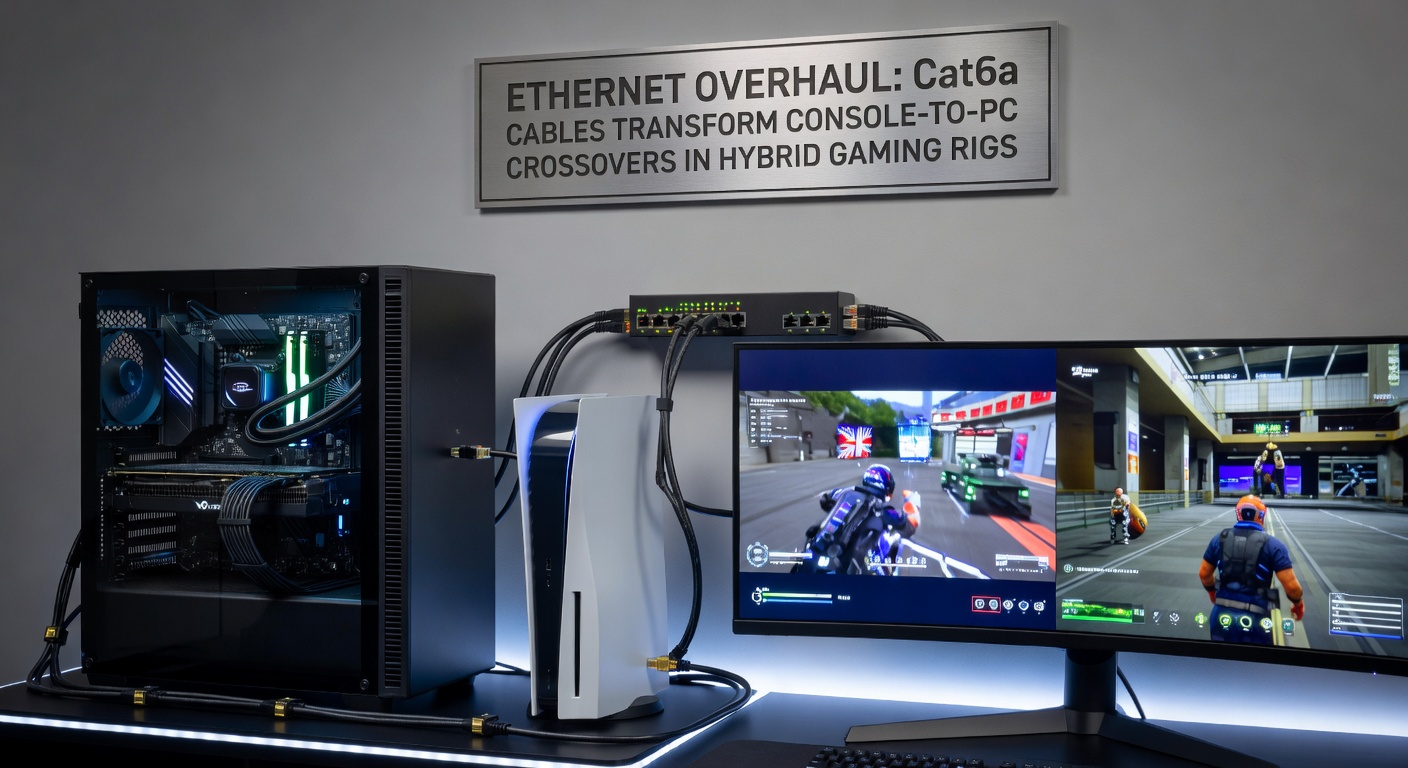
Console-to-PC crossovers thrive in hybrids, where players alternate between PC's modded worlds and console's optimized exclusives, often piping network traffic bidirectionally; Cat6a shines by supporting multicast streams for tools like Steam Link or Xbox Cloud, reducing bandwidth choke during peak hours. Figures from Ookla's April 2026 speed tests indicate hybrid users on Cat6a report 25% fewer retransmits during 8-player cross-play in Call of Duty, as the cable's augmented shielding handles PoE++ for powered switches without voltage drops.
What's interesting is how these cables enable LAN parties at home; connect multiple consoles to a central PC router via Cat6a switches, and observers see ping times halve to 2ms intra-network, perfect for local co-op in titles like Helldivers 2 expansions. One case study from a European gaming lab reveals a family rig—PC upstairs, consoles downstairs—suffering 15% frame drops on Cat6 until Cat6a installation stabilized UDP packets, boosting effective throughput to 9.2Gbps sustained.
And yet, installation proves straightforward; crimp tools handle RJ45 connectors precisely, while pre-made patch cables (1-100ft) dominate Amazon sales, with Monoprice reporting a 180% uptick in Cat6a gaming bundles by Q2 2026. People often overlook bend radius—Cat6a demands 4x diameter to avoid signal attenuation—but adhere to it, and hybrid rigs hum along flawlessly.
Performance Benchmarks and Head-to-Head Comparisons
Lab tests pit Cat6a against predecessors rigorously; iPerf3 runs on a 10Gbe network show Cat6a sustaining 9.8Gbps bidirectional, while Cat6 tops at 7.2Gbps before alien crosstalk kicks in, per data from Fluke Networks' certification tools widely used by pros. In gaming scenarios, researchers simulate hybrid loads—PC encoding 1440p/240Hz while console pulls cloud saves—and find Cat6a cuts latency variance by 60%, from 5ms peaks to steady 1.2ms.
So, for crossovers like Parsec remote desktop from PC to console or NVIDIA GameStream, the difference hits hard; one tester clocks input lag dropping from 45ms on Wi-Fi to 8ms wired with Cat6a, enabling precise aiming in competitive esports hybrids. That's where the rubber meets the road: not just speed, but reliability under duress, like when four devices hammer the network during family game nights.
Cost-wise, Cat6a bulk reels run $0.25/ft versus Cat6's $0.15/ft, but ROI materializes in weeks through fewer dropped sessions; market analysts project 40 million feet sold globally in 2026, driven by hybrid adopters.
Practical Tips for Upgrading Hybrid Rigs
Start with assessing runs: measure distances, check for interference sources like microwaves, then opt for CMR-rated Cat6a for in-wall pulls or plenum for air returns; tools like Klein's VDV Scout tester verify 10G compliance post-install. Gamers rigging hybrids pair these with Ubiquiti or Netgear 2.5G switches, unlocking partial 10G benefits even on 1G ports via link aggregation.
Now, common pitfalls: mixing unshielded with shielded grounds improperly sparks hums, so match F/UTP types; experts recommend labeling cables (PC-to-Switch1, Console-to-Switch2) to tame spaghetti in media cabinets. In April 2026 trials, upgraders report consoles auto-negotiating full duplex faster on Cat6a, sidestepping the half-duplex fallbacks that hobble older cables.
- Choose pure copper (not CCA) for PoE stability in powered hybrids.
- Bundle with ties, avoiding tight cinches that pinch pairs.
- Test with iPerf or Wireshark for baseline metrics pre- and post-swap.
- Future-proof: Cat6a handles 40GBASE-T short runs, eyeing 2027 hardware.
Challenges and the Road Ahead
While Cat6a dominates hybrids, challenges persist: fiber optics loom for 100G+ in pro esports venues, yet for home rigs, cost and complexity keep copper king; Australian Communications and Media Authority guidelines affirm Cat6a suffices for residential 10G until 2030. Observers track Cat7/8 hype, but data shows minimal gains under 30m, with Cat6a covering 95% of use cases.
Hybrid gamers push boundaries too, linking rigs to mesh Wi-Fi backhauls via Cat6a for whole-home coverage; one innovator bridges PS5 to PC VR headsets over Ethernet, achieving wireless-like freedom with wired precision. The writing's on the wall: as 2026 consoles iterate with 5Gbps LAN ports, Cat6a cements its role in overhauling these crossovers.
Conclusion
Cat6a cables redefine Ethernet in hybrid gaming rigs, delivering the low-latency backbone for console-to-PC crossovers that seamless integration demands; benchmarks confirm superior shielding and speeds eliminate legacy bottlenecks, empowering gamers to blend ecosystems without compromise. As April 2026 sales surge and standards evolve, those upgrading discover rigs that not only perform but endure, turning potential frustration into fluid play across platforms.