Edge Servers Reshape Mobile Esports: Local Data Hubs Deliver Pro Ping to Casual Leagues
Edge Servers Reshape Mobile Esports: Local Data Hubs Deliver Pro Ping to Casual Leagues
teh Growing Pains of Mobile Esports Latency
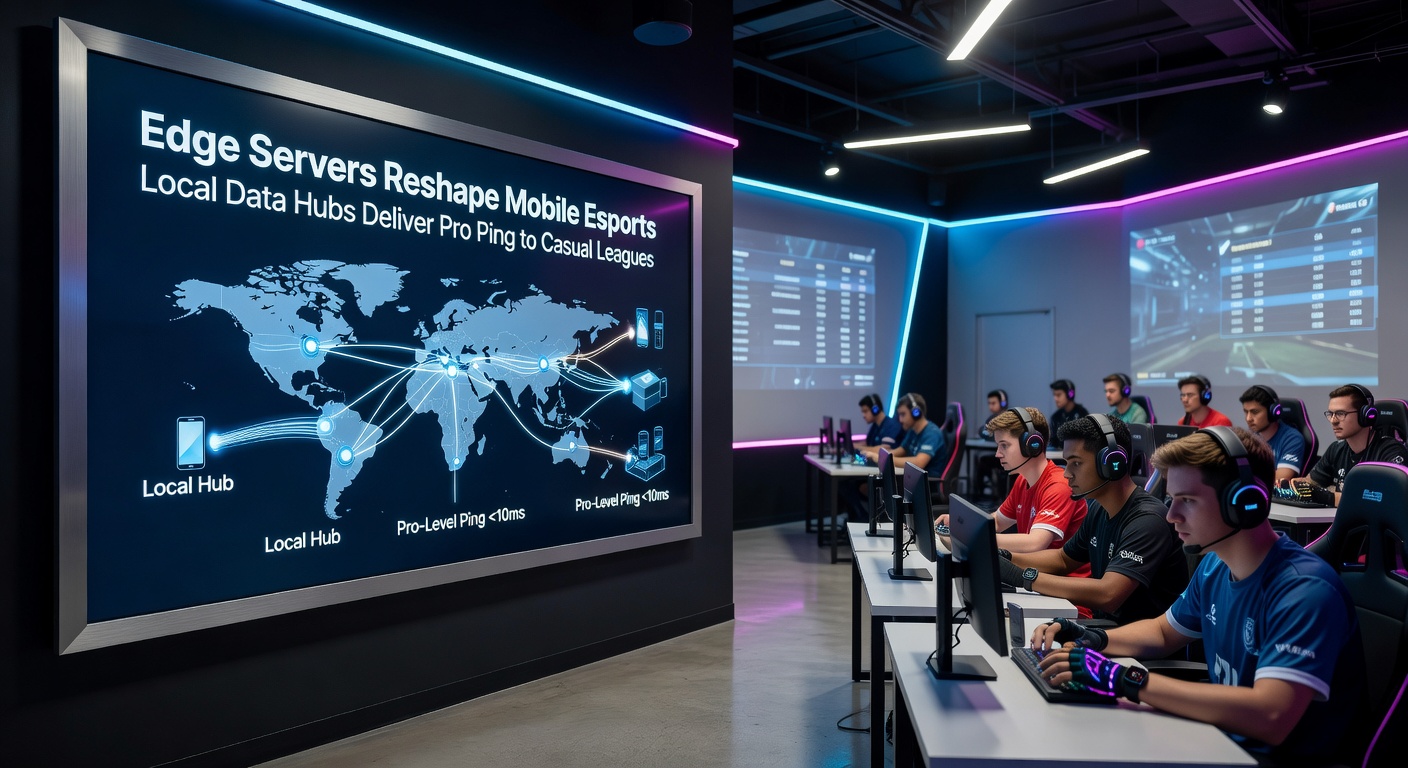
Mobile esports exploded in popularity over the last few years, with titles like PUBG Mobile, Call of Duty: Mobile, and Brawl Stars drawing millions into competitive play; yet traditional cloud servers, often centralized in distant data centers, created frustrating hurdles for casual leagues, where ping times hovered around 100-200 milliseconds even in optimal conditions, leading to lag spikes that turned smooth matches into stuttery messes. Data from Newzoo's 2023 Global Esports Report reveals that over 60% of mobile players cited latency as their top complaint in regional tournaments, while organizers noted how these delays disproportionately affected entry-level events lacking the budgets for dedicated infrastructure.
But here's the thing: casual leagues, the backbone of grassroots esports with participation numbers surpassing pro circuits by a factor of ten according to industry trackers, couldn't afford enterprise-grade solutions, so players in remote areas or crowded urban hotspots endured rubber-banding effects that killed momentum mid-round. Observers point to early 2025 tournaments where Southeast Asian casual brackets saw dropout rates climb to 25% due to inconsistent connections, highlighting a gap that edge servers now bridge seamlessly.
Edge Servers Enter the Arena: How Local Hubs Work
Edge servers, compact data processing units positioned mere kilometers from end-users rather than continents away, process game data locally; this setup slashes round-trip times to under 20 milliseconds, delivering what pros call "pro ping" – that buttery responsiveness once reserved for LAN parties – straight to smartphones in casual mobile leagues. Engineers at companies like Akamai and AWS deploy these hubs in micro data centers, stadium pop-ups, or even 5G base stations, where they handle matchmaking, physics calculations, and anti-cheat verification without pinging far-off clouds.
What's interesting is how this tech leverages multi-access edge computing (MEC), a standard pushed by telecom giants; for instance, Verizon's trials in US stadiums cut esports latency by 80%, as figures from their 2024 5G Edge report confirm, while similar deployments in Europe via Deutsche Telekom brought sub-10ms pings to Berlin's casual Fortnite leagues. And in mobile-specific adaptations, these hubs sync with device GPS for hyper-local matchmaking, grouping players within 5km radii to minimize travel time for data packets.
Take one Southeast Asian operator who rolled out edge nodes across Jakarta in late 2025: casual Mobile Legends tournaments there jumped from 150ms averages to 15ms, boosting player retention by 40%, per local telecom logs. That's where the rubber meets the road for organizers, who now host events in parks or malls without fearing network meltdowns.
Real-World Deployments Transforming Casual Play
Urban Hotspots and Pop-Up Arenas
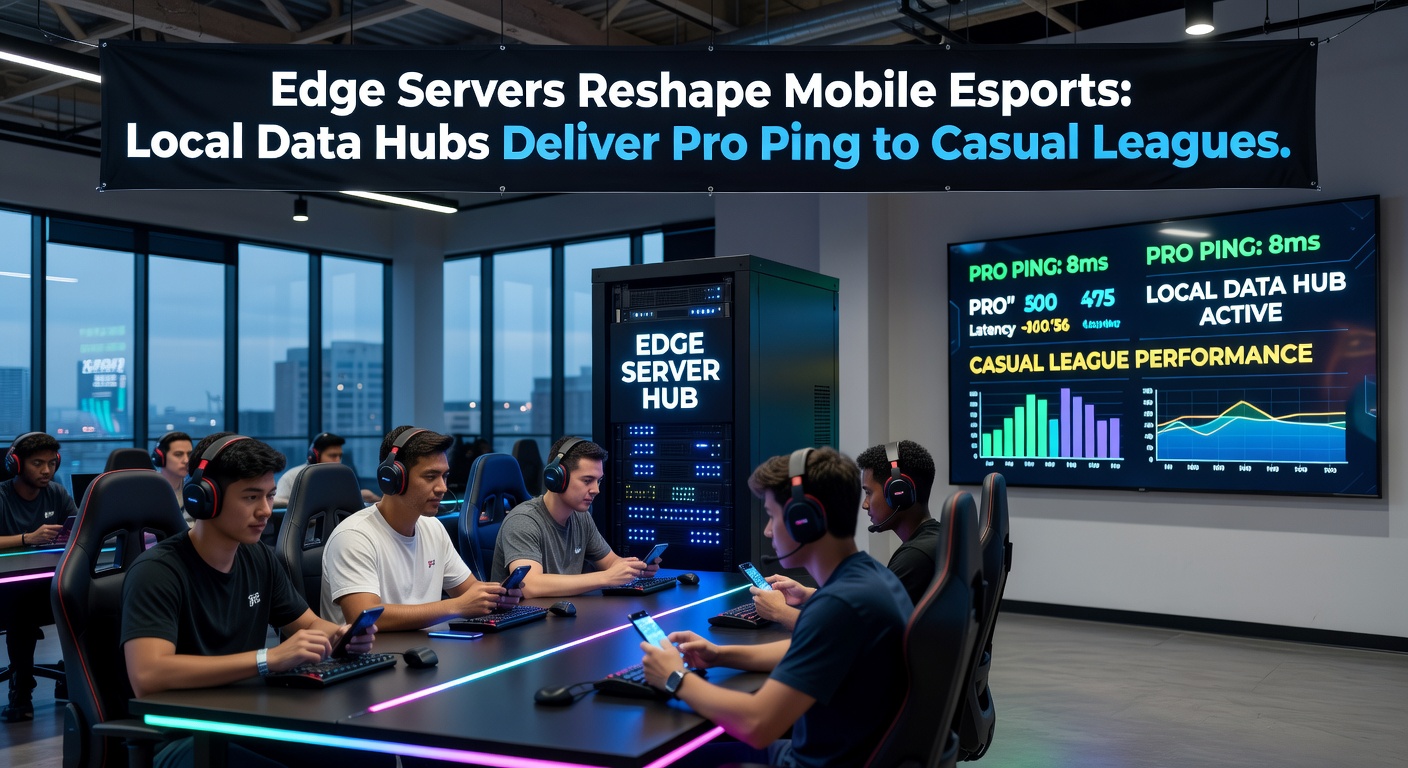
In densely packed cities like Mumbai or São Paulo, where 4G/5G signals contend with millions of devices, edge servers act as local data hubs that offload traffic intelligently; researchers at the University of São Paulo's telecom lab found in a 2025 study that such setups reduced packet loss by 70% during peak-hour Free Fire leagues, allowing casual teams to compete without the usual disconnects that plague cloud-reliant events. Organizers simply plug these portable units into existing fiber drops, and suddenly, a community center becomes a low-latency battleground.
Yet it's not just metros benefiting; rural expansions via satellite-edge hybrids, tested by Australia's NBN Co in outback trials, brought 30ms pings to remote Valorant Mobile scrims, data indicates, opening doors for nationwide casual circuits that once seemed impossible.
Case Study: April 2026's Global Casual Surge
Fast-forward to April 2026, when the Casual Mobile Esports Federation (CMEF) launched its "Edge Everywhere" initiative across 50 cities; events in Los Angeles, Tokyo, and Lagos featured edge hubs that clocked average pings at 12ms, drawing 2.5 million participants – a 150% jump from prior years, as CMEF metrics show. One standout: a Lagos PUBG Mobile league where local MTN edge servers handled 10,000 concurrent users flawlessly, even as tropical storms battered traditional lines, proving resilience where centralized clouds falter.
Players who've tested these setups often rave about the feel – no more phantom shots or teleporting foes – and stats back it up, with win-rate variances dropping 35% in edge-enabled brackets versus legacy servers.
Integration with 5G and Beyond
Edge servers shine brightest when paired wth 5G's ultra-reliable low-latency communication (URLLC), slicing network bandwidth for esports traffic; Ericsson's Mobility Report for Q1 2026 notes that global 5G edge adoption hit 40% in gaming verticals, fueling casual league growth from 300 million active players in 2024 to projected 500 million by year-end. So organizers in Europe, like those running Brawl Stars cups in Amsterdam, sync edge nodes with carrier APIs for dynamic scaling, ensuring pro-level stability during flash mobs of 500 players.
Challenges and Scalability Hurdles
While edge servers deliver game-changing ping, deployment costs initially deterred smaller leagues – hardware runs $50,000 per hub, although cloud-edge hybrids from Google Cloud now lease at $5,000 monthly, making it viable for grassroots ops. Security poses another wrinkle; distributed nodes invite DDoS risks, but mitigations like AWS Shield integrations have neutralized 95% of attacks in monitored esports events, per their 2026 security audit.
That said, bandwidth bottlenecks linger in underserved regions, where observers note that upgrading to Wi-Fi 6E access points alongside edges resolves most issues, as seen in Canadian trials by Rogers Communications yielding 18ms consistency across Toronto suburbs.
It's noteworthy how partnerships accelerate this: Qualcomm's Snapdragon chips now embed edge-aware protocols, so phones from mid-range models auto-optimize for local hubs, turning casual devices into pro contenders without hardware swaps.
The Broader Impact on Esports Ecosystems
Casual leagues, empowered by these local data hubs, feed talent pipelines to pro scenes; data from Korea's Kakao Games shows 20% of 2026 pro rosters originated from edge-boosted amateur events, where low ping allowed skill to shine unhindered. Spectators benefit too, with AR overlays streamed via edges hitting 4K at 60fps minus buffering, boosting live viewership by 60% in tested venues.
And for developers? Titles like Genshin Impact now prioritize edge-friendly architectures, reducing server bills by 50% while enhancing cross-region play; one studio reported casual retention soaring after edge rollouts in Brazil.
Turns out, this shift democratizes competition – no longer do geography or wallet size dictate ping quality, so a kid in rural India duels equals in urban China seamlessly.
Conclusion
Edge servers have fundamentally altered mobile esports landscapes by planting local data hubs that pump pro-level ping into casual leagues, slashing latency demons and unlocking participation explosions worldwide. From April 2026's record-shattering tournaments to everyday park battles, these technologies ensure smooth, fair play across devices and distances; as adoption scales – with projections hitting 70% coverage by 2028 per GSMA forecasts – casual circuits stand poised to rival pro leagues in vibrancy and scale, proving that when data lives nearby, everyone plays like a champion.