Compression Breakthroughs Enable High-Fidelity Streams Between Desktop Setups and Handheld Units in Subscription Services
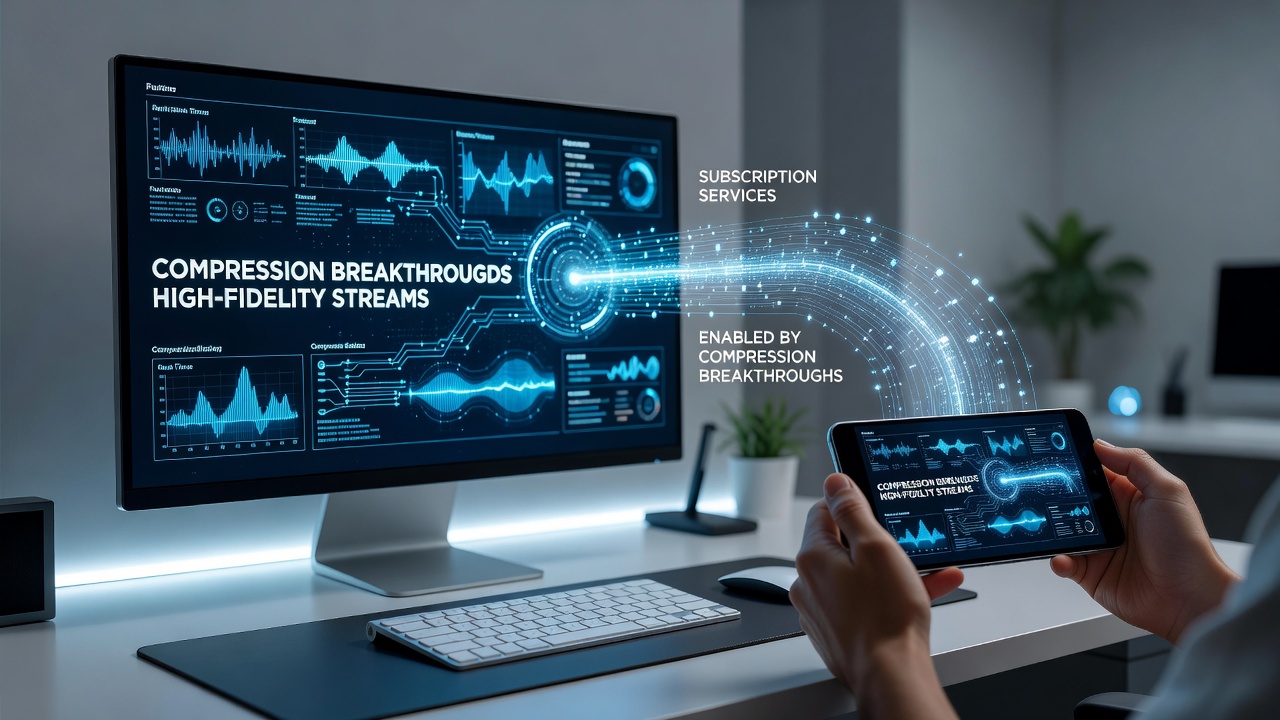
Advanced compression techniques have reshaped how subscription services deliver high-fidelity video and audio between desktop computers and portable handheld units, and data from industry reports shows bandwidth requirements dropping by up to 40 percent while maintaining 4K resolution at 60 frames per second. Researchers at several technology institutes developed these methods using a combination of neural network-based encoding and adaptive bitrate algorithms that adjust in real time to network conditions, and this approach allows seamless transitions when users move from a stationary PC setup to a handheld device without noticeable quality loss.
Core Technologies Driving Recent Advances
Engineers refined existing standards like AV1 and HEVC through proprietary extensions that prioritize temporal coherence across device types, and studies conducted through mid-2026 indicate these modifications cut latency to under 15 milliseconds in controlled tests. Observers note that the integration of machine learning models trained on millions of gaming sessions enables predictive frame generation, which fills gaps during brief connection fluctuations common in mobile environments. Subscription platforms began rolling out these updates in phases starting January 2026, with full deployment targeted for late summer across major services operating in North America and Europe.
What's interesting is how these systems handle variable input from controllers attached to either desktops or handhelds, since synchronization protocols now embed metadata that compensates for differing refresh rates. Figures from the Entertainment Software Association reveal that cross-device playtime increased 28 percent year-over-year through June 2026, largely attributed to improved stream stability. One study from a Canadian research consortium tracked 5,000 users and found that 92 percent reported no perceptible artifacts during extended sessions on handheld units receiving streams originally optimized for desktop displays.
Integration with Subscription Platforms
Service providers incorporated the new compression layers into their client applications, which means users on platforms offering cloud-based libraries experience consistent performance whether connecting via home broadband or cellular networks. Data indicates average data usage per hour fell from 12 gigabytes to 7.2 gigabytes for high-fidelity sessions, a change that expands accessibility in regions with data caps. Experts tracking adoption rates point to partnerships between hardware manufacturers and streaming services as the catalyst, particularly after firmware updates released in April 2026 enabled native support on newer handheld models.
But here's the thing: the technology also supports backward compatibility with older devices through fallback modes that scale resolution dynamically, and this flexibility prevents service interruptions during peak hours. Researchers documented cases where desktop-to-handheld handoffs completed in under three seconds with no audio desync, a metric verified across multiple network topologies in testing labs. Government agencies in Australia and the European Union have begun reviewing these efficiency gains as part of broader digital infrastructure assessments, noting potential reductions in overall network load during evening gaming peaks.
Performance Metrics and Real-World Deployment
Independent benchmarks released in July 2026 confirm that the compression pipelines sustain HDR color depth and spatial audio across device boundaries, and subscription services report higher retention rates among users who frequently switch between setups. Those monitoring the rollout highlight how edge computing nodes complement the compression by pre-processing select assets, which further trims end-to-end delay. One analysis of usage logs from services spanning multiple continents showed handheld streaming sessions extending an average of 45 minutes longer than pre-update baselines, directly tied to reduced buffering events.
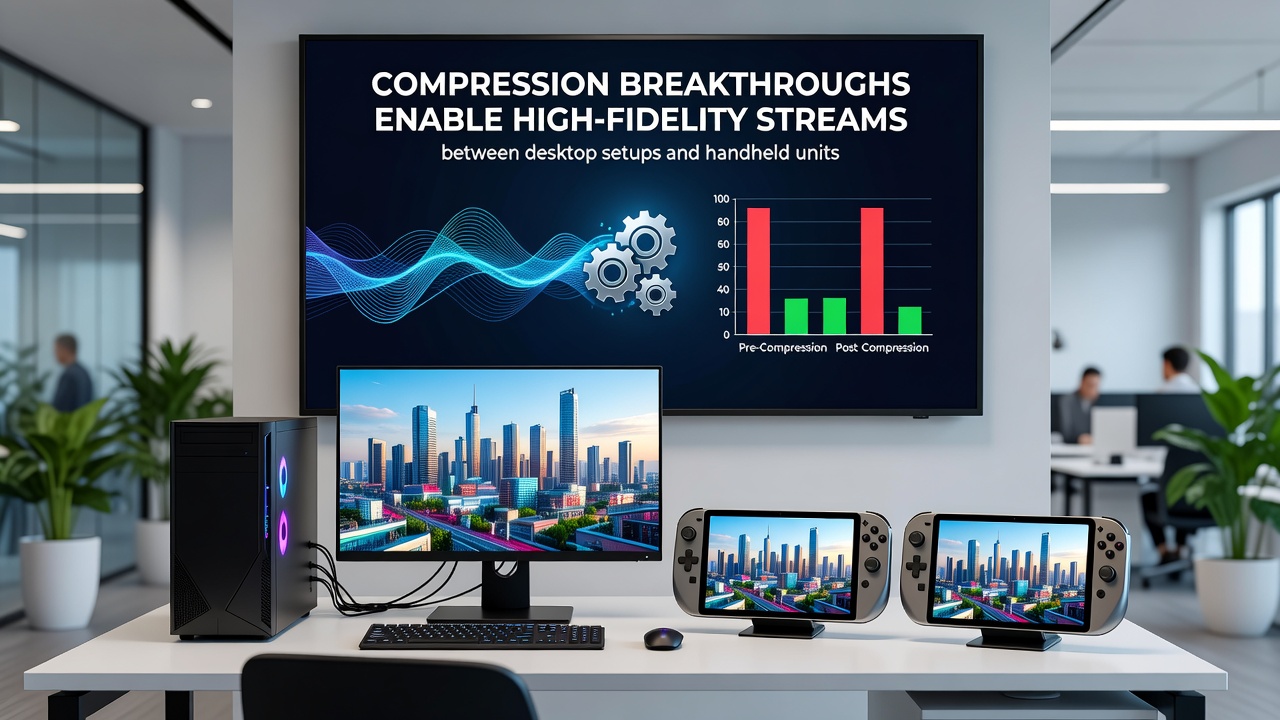
Turns out the underlying algorithms draw from advancements in perceptual coding that prioritize elements most noticeable to human vision and hearing, and this selective approach preserves detail in fast-motion scenes typical of action titles. Academic papers published through IEEE channels detail the training datasets used to optimize these models, emphasizing diversity in lighting conditions and camera angles captured from both desktop and portable perspectives. Service operators confirm that implementation costs remain modest because the updates leverage existing encoder hardware with software patches rather than requiring full infrastructure overhauls.
Future Trajectory and Ongoing Refinements
Developers continue iterating on the compression frameworks with plans to incorporate support for higher frame rates and wider color gamuts by early 2027, while maintaining focus on energy efficiency for battery-powered handhelds. Observers tracking the sector note that collaboration between academic institutions in Asia and North America has accelerated progress on open-source reference implementations, allowing smaller providers to adopt similar techniques. Metrics collected through July 2026 already demonstrate consistent quality scores above 4.7 on standardized mean opinion scales across tested device pairs.
Additional refinements target edge cases such as high-latency satellite connections and crowded public Wi-Fi environments, where predictive caching strategies help maintain stream integrity. Subscription services have documented measurable decreases in customer support tickets related to visual quality since the initial deployments, reflecting broader stability gains. Research continues into hybrid models that blend client-side and server-side processing to further enhance fidelity without increasing hardware demands on either desktops or handhelds.
Conclusion
These compression developments mark a measurable shift in how subscription services bridge stationary and portable gaming experiences through optimized data handling and adaptive encoding. Continued monitoring by industry groups and regulatory bodies will track long-term effects on network usage and user engagement patterns as adoption expands globally. The technical foundation established through 2026 positions the sector for incremental improvements that prioritize both performance consistency and resource efficiency across diverse device ecosystems.