Cloud Rendering Farms Optimize Workload Distribution to Cut Input Lag in Subscription Gaming Services
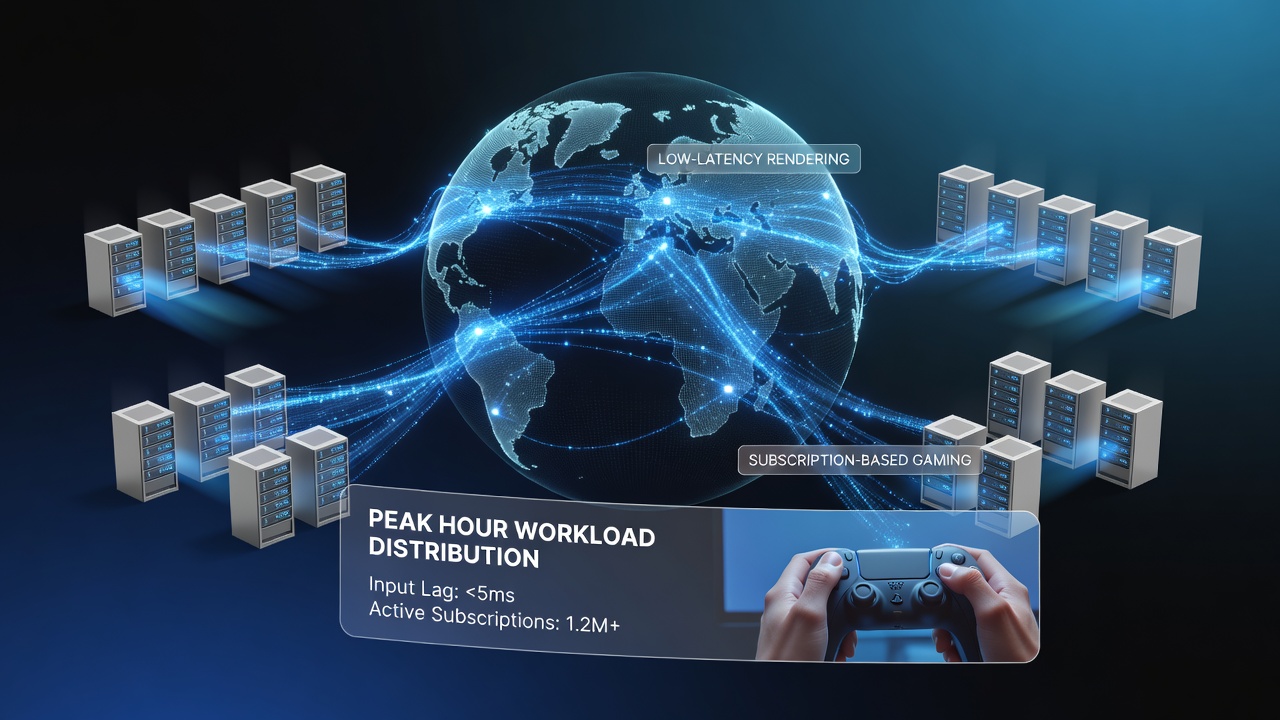
Cloud rendering farms handle graphics processing for subscription-based gaming services by spreading computational tasks across networks of servers, and this approach directly addresses input lag that spikes when user numbers climb during evening hours. Operators monitor traffic patterns in real time so they can shift rendering jobs from overloaded machines to those with available capacity, which keeps frame delivery steady for players on consoles, PCs, and mobile devices alike.
Mechanics of Workload Distribution in Rendering Farms
Rendering farms consist of clusters that receive game state data from central servers, then break each frame into segments assigned to separate GPUs; load balancers use algorithms that factor in current queue lengths and predicted demand to route those segments without creating bottlenecks. When peak hours arrive, systems automatically scale by activating idle nodes in different geographic zones, and this prevents any single location from becoming a choke point that would otherwise add milliseconds to response times.
Subscription platforms such as those offering cloud access to AAA titles rely on these farms because local hardware varies widely among users, yet centralized rendering delivers consistent performance; data centers track metrics including packet arrival rates and render completion times so adjustments happen before lag becomes noticeable to the end user.
Peak-Hour Challenges and Mitigation Techniques
Evening surges typically begin around 6 PM local time across major markets, and without dynamic distribution the simultaneous requests for high-fidelity scenes would overwhelm individual render nodes. Farms counter this by employing predictive models trained on historical usage data, which forecast demand spikes hours ahead and pre-allocate resources accordingly.
Techniques include task migration that moves partially rendered frames mid-process when a node nears capacity, along with priority queuing that favors low-latency needs such as player movement commands over background environment updates. Observers note that these methods have reduced average input lag by measurable margins in services that adopted them during 2025 rollouts.

Integration with Subscription Models and June 2026 Developments
Subscription services bill monthly or annually for unlimited access, and their revenue model supports continuous investment in farm infrastructure because user retention depends on smooth sessions during the busiest windows. In June 2026 several providers expanded node capacity in secondary regions after analyzing traffic logs from the prior year, which showed consistent overload patterns in primary hubs.
According to reports from the Entertainment Software Association, cloud gaming subscriptions grew steadily through 2025, prompting operators to refine distribution protocols that balance render loads across continents. Research published by academic teams at institutions tracking network performance indicates that such refinements maintain sub-50-millisecond response windows even when concurrent sessions exceed prior records.
Supporting Infrastructure and Data Flow
Data centers maintain redundant power and cooling systems so render nodes stay operational without thermal throttling during extended peaks, while fiber links between sites carry compressed frame data back to user devices at high speeds. Edge caches positioned closer to population centers store frequently requested assets, reducing the volume of data that must travel from central farms and thereby trimming overall latency.
Engineers at these facilities implement heartbeat monitoring that flags any node falling behind, then reroutes its assigned tasks within milliseconds; this active management keeps the system responsive without requiring manual intervention during sudden traffic spikes.
Conclusion
Cloud rendering farms continue to refine workload distribution methods that keep input lag low for subscription gaming users even when demand reaches daily highs, and ongoing capacity additions through 2026 support further scaling. These systems rely on real-time monitoring combined with predictive allocation to maintain performance across diverse player hardware and locations.