Breakthroughs in Eye-Tracking Technology Enabling New Interaction Methods for Strategy Games on Multiple Platforms
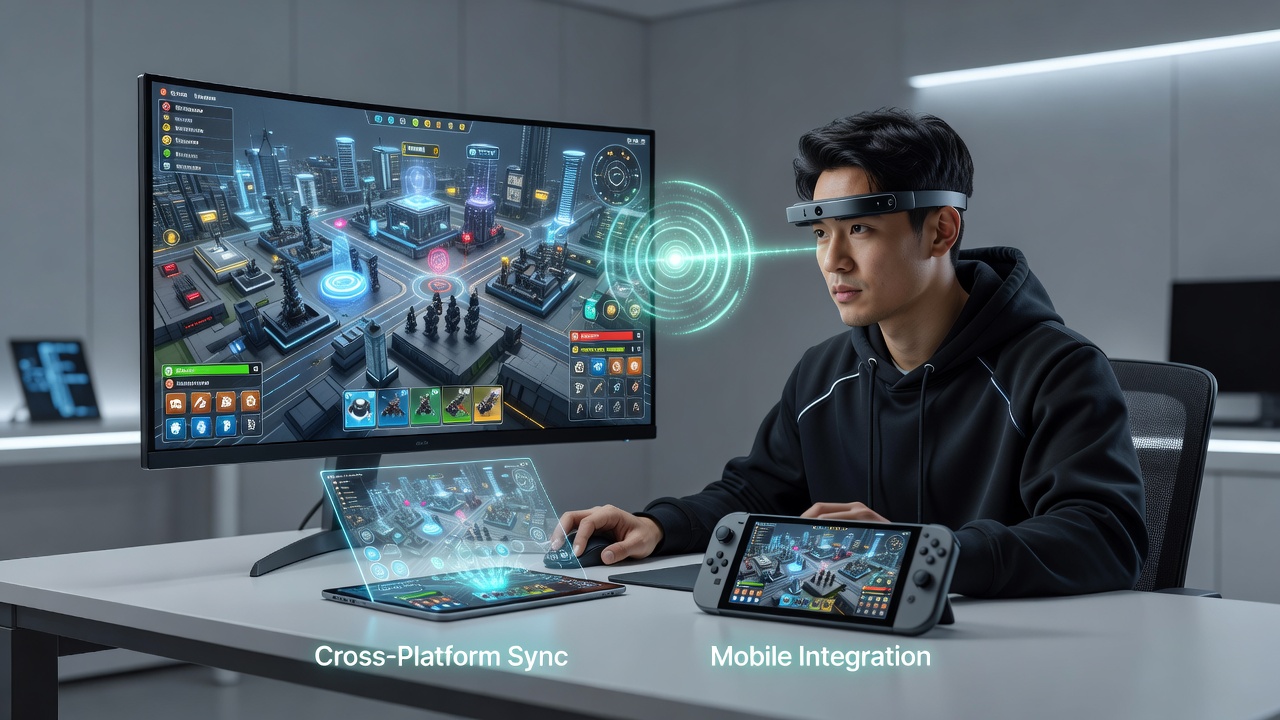
Eye-tracking technology has advanced rapidly in recent years, and researchers continue to refine sensor precision alongside processing algorithms that interpret gaze direction with increasing accuracy. These developments allow players to issue commands in strategy games by directing their visual attention rather than relying solely on traditional controllers or mice, and data from multiple studies shows integration across PC, console, and mobile hardware has become more seamless since 2024.
Core Technological Advances
Modern eye-tracking systems employ infrared cameras paired with machine learning models that distinguish between fixation points and rapid eye movements, while calibration routines now complete in under ten seconds on most devices. According to findings published by the University of Toronto, error rates in gaze detection have dropped below two degrees of visual angle in controlled gaming environments, and this improvement stems from hybrid sensor arrays that combine pupil tracking with head position data. Manufacturers have embedded these components into both standalone monitors and wearable headsets, which means strategy titles can detect where a player looks on a battlefield map without requiring additional peripherals.
Processing occurs locally on dedicated chips in many setups, and this reduces latency to levels comparable with mouse input in fast-paced scenarios. Observers note that firmware updates rolled out in early 2025 further stabilized performance during extended sessions, particularly when multiple users share the same screen in split-view modes.
Applications in Strategy Gameplay
Strategy games benefit directly because players often manage dozens of units simultaneously, and eye-tracking introduces selection mechanics where focusing on an icon highlights it for immediate action. Developers have implemented gaze dwell timers that trigger abilities after a configurable hold period, and this approach pairs naturally with voice commands or button presses on secondary controllers. One study revealed that participants completed resource allocation tasks thirty percent faster when gaze input supplemented keyboard controls, although results varied by game genre and individual experience levels.
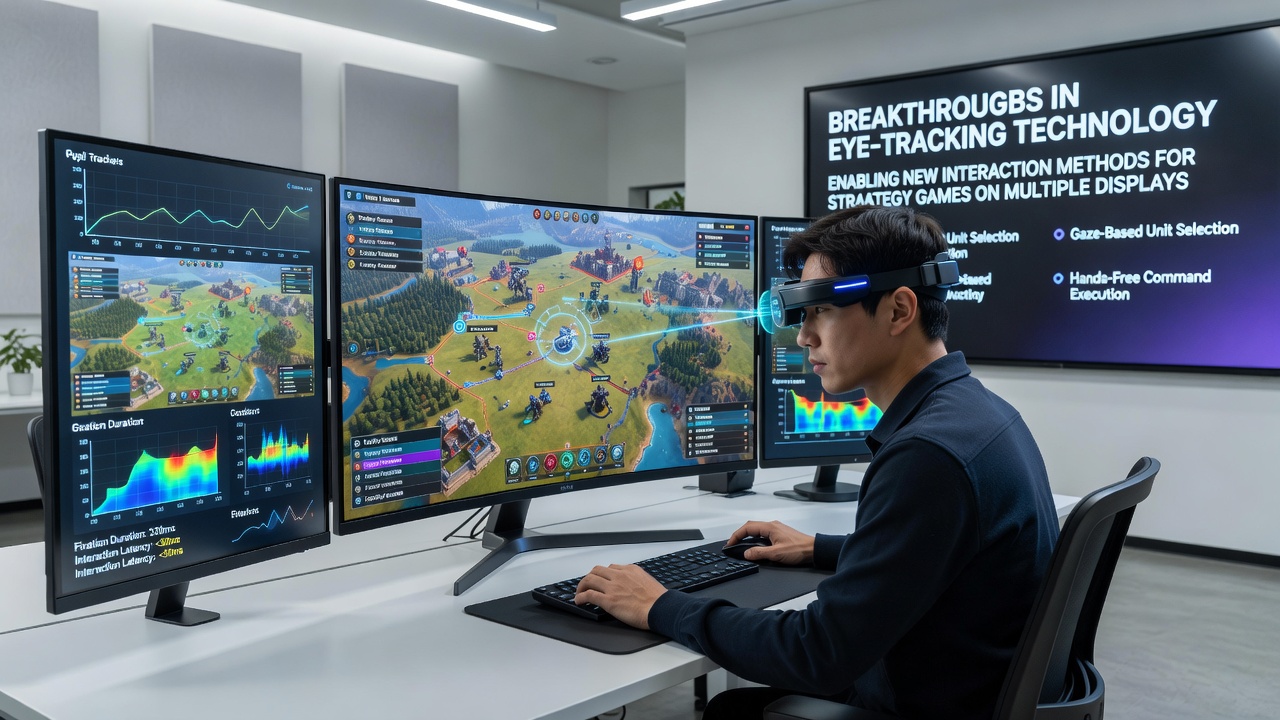
Cross-platform libraries now support synchronized eye data streams, so progress in a mobile session transfers to console play without recalibration in many cases. Engineers achieved this through standardized APIs that map gaze coordinates to game world positions regardless of display resolution or aspect ratio, and testing conducted by European research consortia confirmed compatibility between Android handhelds and high-end PCs. In June 2026 several major titles plan patches that expand these features to include predictive targeting, where the system anticipates unit paths based on sustained player attention.
Platform Integration and Accessibility
Console manufacturers have begun certifying eye-tracking accessories that connect via USB or wireless protocols, and this opens strategy franchises previously limited to controller schemes. Mobile platforms leverage front-facing cameras already present in most devices, which lowers hardware barriers while software optimizations handle variable lighting conditions common during on-the-go sessions. Those who have tested hybrid setups report consistent performance when moving between a living room television and a portable tablet, because cloud-assisted calibration profiles store individual eye characteristics securely.
Accessibility advantages appear in titles that previously demanded precise clicking or rapid button sequences, and gaze-based alternatives allow participation from players with limited mobility. Industry reports from the Australian Interactive Games Association indicate rising adoption rates in educational and rehabilitation contexts, where strategy mechanics serve as engagement tools without physical strain.
Challenges and Ongoing Refinements
Despite progress, environmental factors such as bright sunlight or rapid head movements can still introduce tracking drift, and developers address these through adaptive filtering that smooths data over short time windows. Battery impact remains minimal on modern chipsets, yet some portable devices require users to enable low-power modes during long campaigns. Research continues into multi-user eye differentiation for local multiplayer, and early prototypes presented at 2025 conferences demonstrate separation of up to four simultaneous gaze streams on shared displays.
Conclusion
Eye-tracking integration continues to expand interaction possibilities in strategy games by layering visual attention onto existing control schemes across PC, console, and mobile ecosystems. Data from academic and industry sources shows measurable gains in task efficiency and broader accessibility, while standardization efforts ensure smoother transitions between devices. As refinements accumulate through 2026 and beyond, these technologies stand positioned to reshape how players engage with complex strategic environments on any platform.