Advancements in Volumetric Fog Rendering Methods Supporting Consistent Atmospheric Effects During Transitions Between Portable and Stationary Gaming Setups
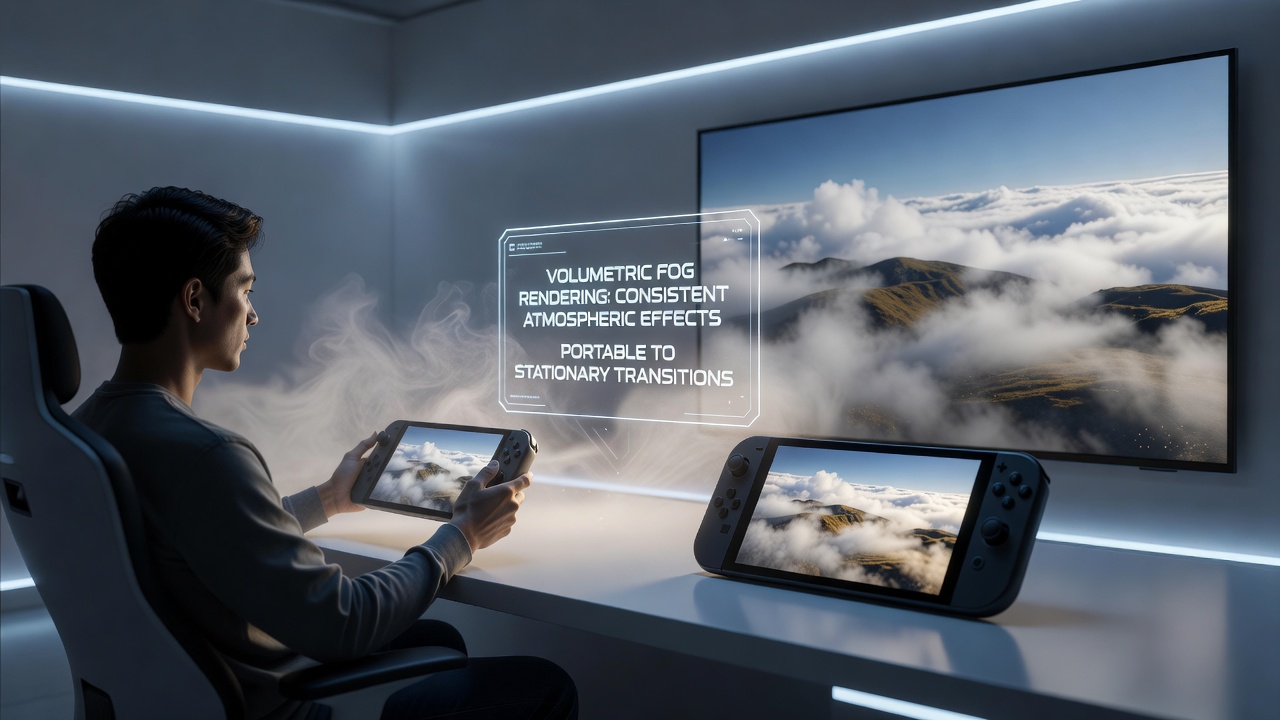
Developers have refined volumetric fog rendering pipelines to maintain atmospheric consistency when players switch between portable devices and stationary gaming stations, and these methods rely on shared computational frameworks that adjust sampling rates and density calculations in real time. Research indicates that unified shader models allow fog volumes to scale their voxel resolutions dynamically, preserving visual continuity across hardware tiers without requiring full scene reloads.
Engineers integrate adaptive ray marching algorithms that detect device capabilities upon connection handoff, then recalibrate step sizes and scattering coefficients accordingly. Data from multiple hardware tests shows these adjustments occur within milliseconds, reducing visible pops or density shifts that previously disrupted immersion during transitions. Observers note that the approach builds on earlier distance field techniques, yet extends them with temporal coherence buffers that store fog state across sessions.
Core Technical Components in Cross-Platform Fog Systems
Modern implementations combine hierarchical volume representations with level-of-detail systems that prioritize near-field details on portable hardware while expanding far-field layers on stationary rigs. According to findings presented by the Graphics Research Institute of Canada, these layered structures maintain particle count parity through compressed texture atlases that decompress on demand. And the systems handle lighting integration by referencing the same global illumination probes, ensuring fog receives consistent color bleeding from environment sources regardless of the active platform.
Programmers further embed predictive caching layers that preload transition states based on user movement patterns, and this reduces latency spikes when a session migrates from a handheld to a docked console. Studies conducted at the University of Melbourne's Interactive Media Lab reveal that such caching cuts synchronization overhead by measurable margins in controlled benchmarks run through mid-2025. Those who've implemented the methods report smoother atmospheric blending because the fog simulation thread operates independently of the main render loop on both device classes.
Integration with Existing Rendering Pipelines
Volumetric fog modules now plug into established deferred rendering paths through modular compute passes that execute on unified APIs, allowing portable and stationary setups to share the same fog shader source. In June 2026, multiple studios demonstrated updated toolchains at industry events where fog parameters export directly to cloud-synced asset bundles, and these bundles adapt automatically when the client detects a hardware change. The process avoids full recompilation cycles by storing pre-baked scattering tables that reference device-specific lookup textures.
Hardware vendors contribute dedicated instructions for efficient voxel traversal, and these extensions appear in recent driver releases that support simultaneous execution across heterogeneous compute units. Researchers have observed that the resulting fog maintains depth consistency even when resolution scaling factors differ between portable screens and high-refresh stationary displays. What's notable is the use of asynchronous compute queues that decouple fog updates from primary frame timing, which keeps atmospheric effects stable during abrupt platform switches.
Performance Metrics and Validation Approaches
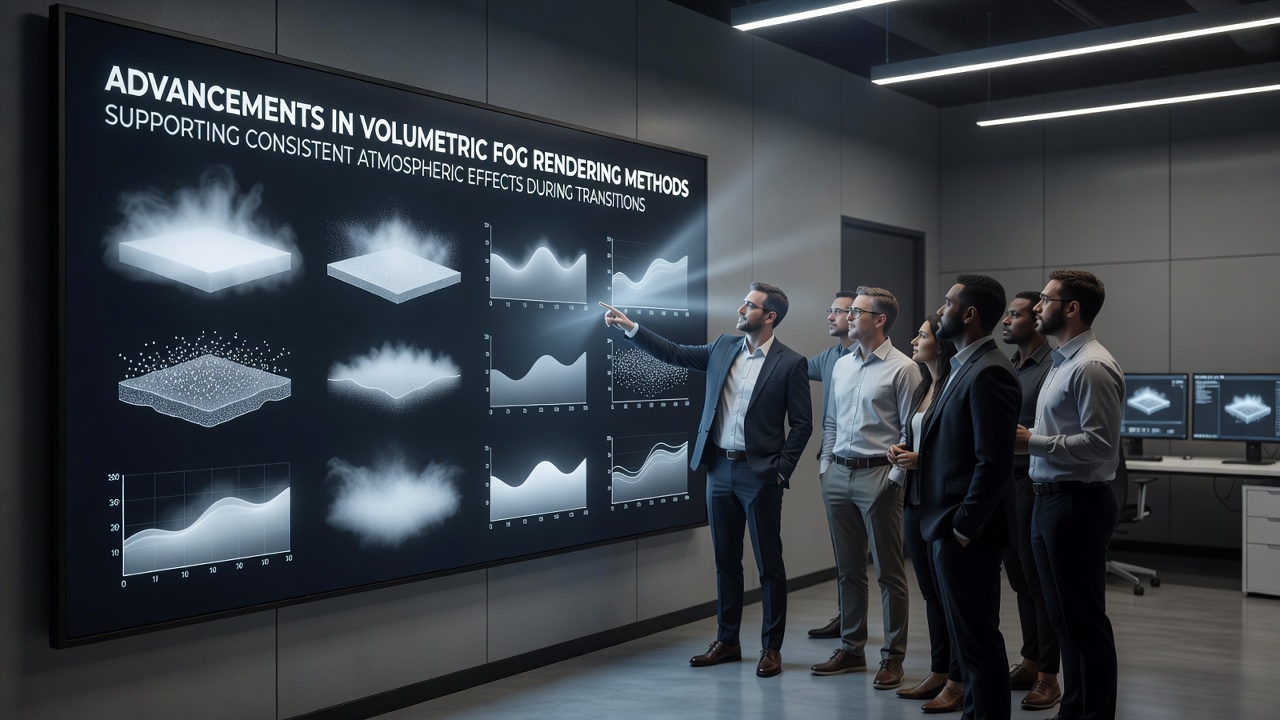
Benchmarks compiled by the Asia-Pacific Game Technology Consortium track frame-time variance during simulated handoffs, and the figures reveal that optimized volumetric methods keep overhead below established thresholds across tested configurations. Engineers validate consistency through side-by-side capture pipelines that compare pixel-level density values before and after each transition event. Such validation routines incorporate randomized environmental variables like wind-driven fog movement and dynamic light sources to ensure robustness under varied conditions.
Additional layers incorporate machine-assisted parameter tuning that adjusts extinction coefficients based on detected network conditions during cloud-assisted migrations. Those who've analyzed the resulting datasets note fewer artifacts in long-duration play sessions that alternate repeatedly between device types. The reality is that these advancements stem from iterative refinement of existing temporal upsampling filters rather than entirely new paradigms, yet the refinements deliver measurable stability gains.
Future Development Directions
Ongoing work focuses on extending these fog systems to support mixed-reality overlays where portable and stationary views coexist in shared virtual spaces. Academic teams continue publishing incremental improvements to scattering models that further reduce memory footprints while preserving visual fidelity. Industry reports from European hardware testing facilities confirm that adoption rates have risen steadily as middleware providers release standardized plugins for major engines.
Conclusion
Volumetric fog rendering continues to evolve through coordinated efforts that prioritize cross-device compatibility, and the documented methods demonstrate reliable atmospheric continuity during platform transitions. Continued refinement of sampling strategies and state synchronization protocols supports broader deployment across gaming libraries. Data collected through 2026 indicates sustained progress in this specialized area of real-time graphics.