Adaptive Resolution Scaling Unifies Visual Standards in Esports Competitions
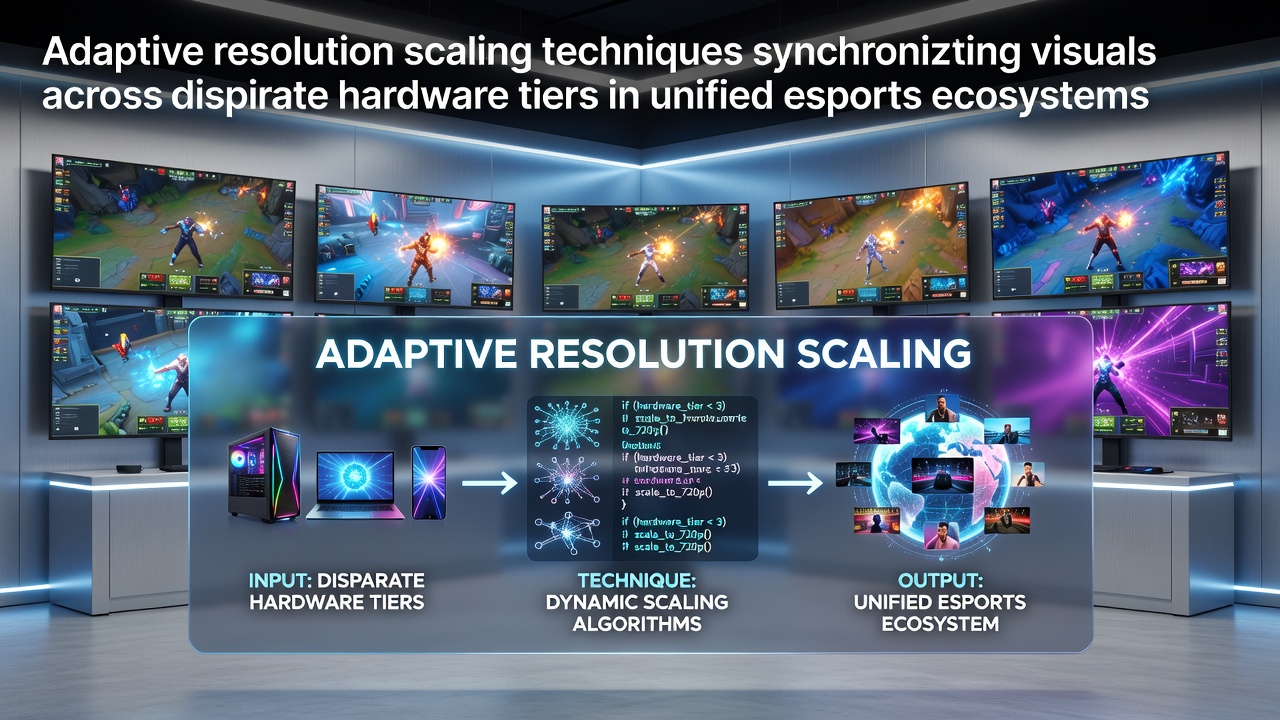
Adaptive resolution scaling techniques have emerged as essential tools for maintaining consistent visual output across hardware configurations that range from flagship gaming PCs to mid-tier consoles and portable devices in shared esports environments, and these methods adjust pixel counts dynamically while preserving competitive integrity. Developers implement algorithms that monitor frame rates and scene complexity then lower or raise internal resolutions without introducing noticeable artifacts, which allows participants on disparate systems to experience equivalent levels of detail during live matches.
Research indicates that such scaling relies on temporal upsampling combined with motion vector data to reconstruct sharp images from lower-resolution renders, and this approach reduces the performance gap between systems that differ by several generations of graphics hardware. In practice, engines like Unreal Engine 5 integrate these features through plugins that communicate with tournament servers to enforce uniform visual targets, ensuring no single setup gains an unintended advantage from higher native fidelity.
Core Mechanisms Behind Cross-Tier Synchronization
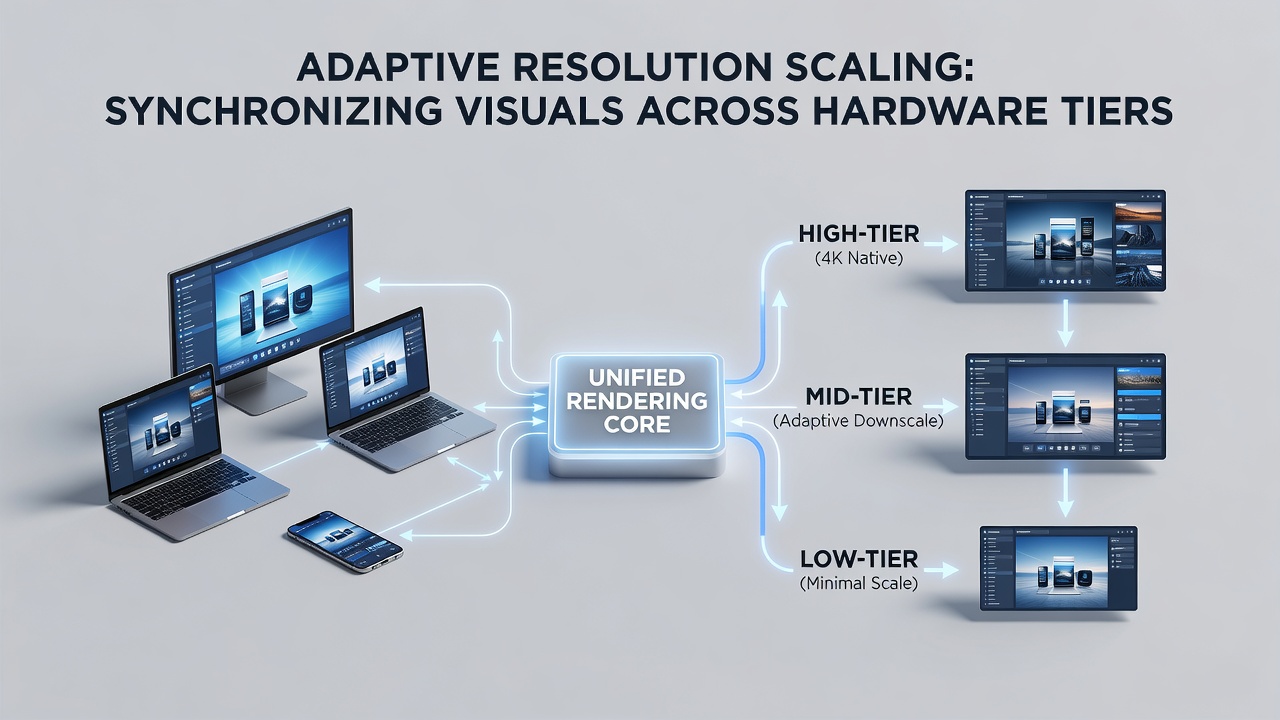
Hardware detection occurs at launch when clients report GPU capabilities, VRAM amounts, and thermal limits to a central matchmaking service that assigns resolution caps accordingly, while subsequent adjustments happen frame-by-frame based on real-time telemetry. Engineers combine this with variable rate shading so that peripheral screen areas receive fewer samples during intense action sequences, which preserves central clarity where player attention concentrates most.
Figures from industry benchmarks reveal that synchronized scaling can stabilize frame delivery within a two-millisecond window across platforms, and this consistency proves critical in titles where split-second decisions determine outcomes. Observers note that the process avoids the visual pop-in associated with older dynamic resolution methods by blending previous frames intelligently, creating smoother transitions when hardware tiers shift mid-session.
Deployment Across Major Esports Titles in 2026
During the July 2026 global qualifiers, organizers required all entrants to activate adaptive scaling profiles that matched a baseline of 1440p equivalent output regardless of device, and this mandate covered PC rigs running discrete GPUs alongside cloud-streamed sessions on tablets. Teams reported that the unified pipeline eliminated disputes over visual parity, because every competitor rendered the same effective detail level even when raw hardware specifications diverged significantly.
What's interesting is how these techniques integrate with existing anti-cheat frameworks that validate client-reported resolution states, preventing attempts to bypass caps through modified drivers. Data shows participation from regions with varying infrastructure benefited most, since mobile players in areas with frequent network fluctuations could still match the visual standard set by stationary setups without hardware upgrades.
Technical Challenges and Standardized Solutions
Latency introduced by scaling computations remains a concern, yet developers mitigate it through asynchronous compute queues that overlap reconstruction with other rendering passes, and this keeps total added delay below perceptible thresholds. Compatibility testing across vendors ensures that both AMD and NVIDIA implementations produce matching results when the same target parameters are applied, while console-specific variants account for fixed memory architectures that differ from open PC environments.
Those who've studied cross-platform performance data indicate that standardized profiles published by governing bodies reduce implementation variance, and one notable example involves collaboration between hardware manufacturers and esports leagues to certify profiles for upcoming seasons. The reality is that without such coordination, visual discrepancies could reappear when new hardware launches mid-cycle.
Impact on Player Experience and Tournament Integrity
Players competing on lower-tier hardware gain access to the same environmental cues and object clarity as those on premium systems, which levels the field in genres that rely on precise visual information such as tactical shooters and real-time strategy games. Tournament logs from 2026 events demonstrate fewer appeals related to perceived graphical advantages after scaling enforcement began, confirming the practical value of these systems in high-stakes settings.
According to findings shared by the IEEE Global Esports Technical Committee, synchronized resolution methods correlate with reduced viewer complaints about inconsistent streams, because broadcast feeds originate from matched visual sources. The ball's in the developers' court to maintain these standards as hardware evolves further.
Future Directions for Unified Ecosystems
Emerging extensions incorporate machine learning models trained on gameplay footage to predict optimal scaling thresholds before performance dips occur, and early tests suggest these predictive layers could further tighten synchronization windows. Integration with cloud rendering services allows hybrid sessions where some computation shifts off-device while maintaining the same visual output standard enforced locally.
Research from the National Research Council Canada highlights how regional testing facilities validate these advancements across diverse network conditions, supporting broader adoption in international circuits. Observers note steady progress toward ecosystems where hardware differences become irrelevant to competitive fairness.
Conclusion
Adaptive resolution scaling continues to reshape how esports organizers approach hardware diversity, delivering synchronized visuals that support fair play without restricting participation. Continued refinement of these techniques, guided by collaborative standards and real-world deployment data, positions the industry for sustained growth across all device categories.